


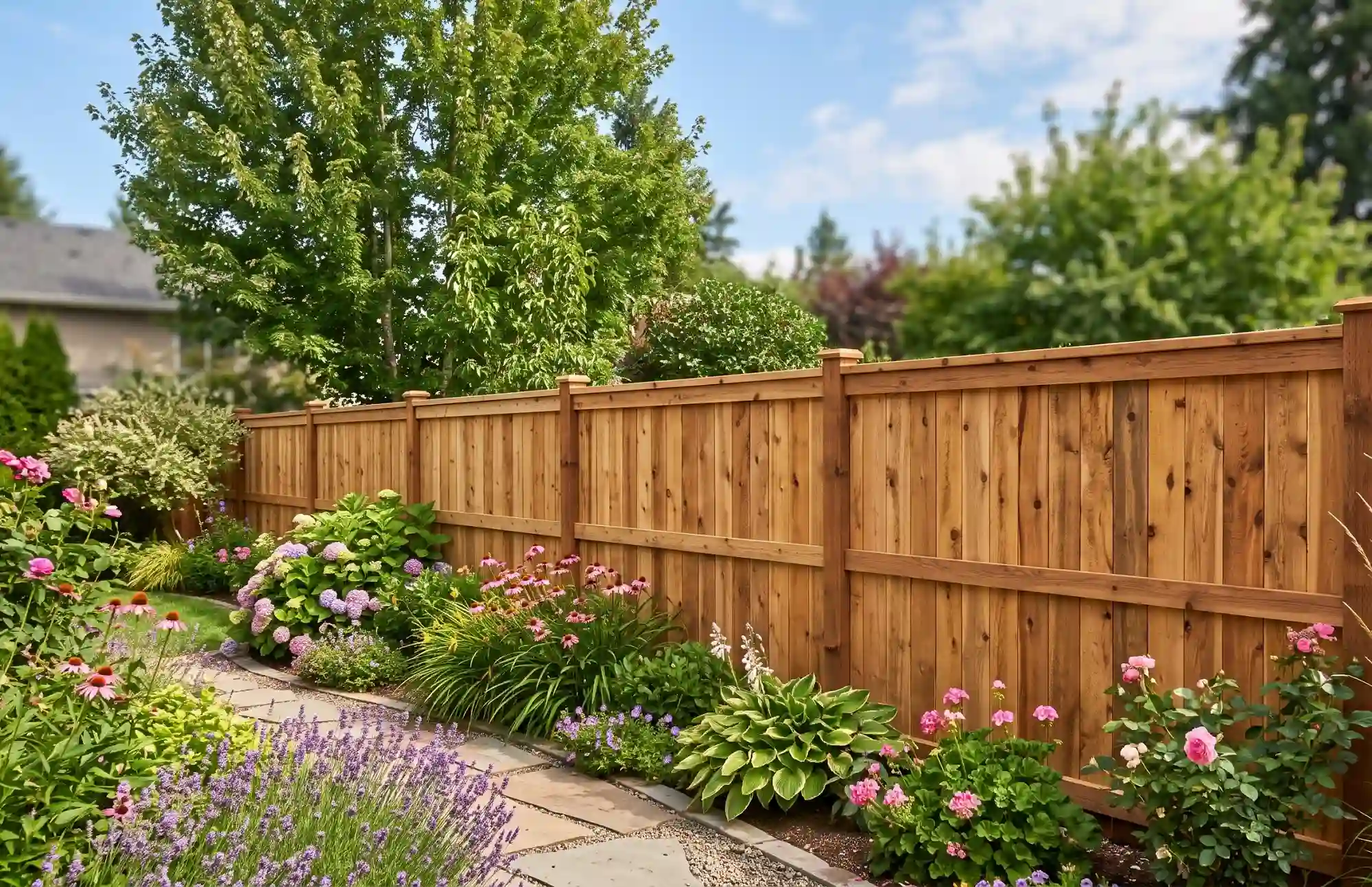


Every homeowner wonders whether their next outdoor upgrade will actually pay off when it’s time to sell. A new fence can transform how your property looks and functions — but the real question is whether it increases your home’s market value.
As Chicagoland cedar fence installers with almost 100 years of experience, we ensure your investment delivers both immediate curb appeal and long-term value. This analysis breaks down the real ROI data, what buyers actually value, and how cedar stacks up against other materials in our local market.
The Financial Reality: What ROI Can You Expect?
Home improvement projects vary widely in return, but exterior upgrades usually outperform interior remodels. Fence installation sits in a reliable mid-range category, balancing moderate costs with strong appeal for most buyers.
Cedar fence installation in Chicagoland typically delivers a 30-70% return on investment based on the initial cedar fence cost. This places fencing in the mid-range category for exterior improvements, below high-performers like garage door replacement (194% ROI) but above many interior remodels.
For a standard 200-linear-foot privacy fence costing around $5,800-$6,600 installed, you can expect to add approximately $1,740-$4,620 to your home's appraised value.
The wide ROI range depends on three main factors: installation quality, the fence’s condition when you sell, and how well it fits neighborhood expectations. A professionally built cedar fence in excellent shape always adds more value than a worn or uneven DIY project.
Why Appraisers Value Fences Differently Than Buyers
Appraisers follow strict formulas that don’t always account for emotional factors driving purchase decisions. This creates a gap between appraisal math and real-world buyer behavior — one that informed sellers can use to their advantage.
Licensed appraisers evaluate fences by their condition, purpose, and neighborhood consistency rather than by material type alone. A well-maintained pressure-treated pine fence may earn a similar score to a cedar fence of equal build quality. However, many buyers view cedar as premium, appreciating its warmth and natural look. That perception often shortens the time on market and boosts negotiation strength, even when appraisal numbers don’t fully reflect the upgrade.
The Hidden ROI: Faster Sales and Expanded Buyer Pool
True property value isn’t limited to an appraisal sheet. The ability to attract qualified buyers faster and inspire higher offers often matters more than minor differences in assessed value.
Key buyer demographics:
- Families with young children (33% of first-time buyers): View fenced yards as non-negotiable for safety and play space.
- Pet owners (62% of fence buyers): Consider secure containment essential before making an offer.
- Privacy-focused buyers: Prioritize homes with established boundaries in dense suburban areas.
Note: In competitive Chicagoland markets such as Naperville, Downers Grove, and Oak Forest, homes with quality fencing typically sell 15–20% faster than similar unfenced properties, especially those aimed at family buyers.
How Cedar Compares to Other Fencing Materials
Material choice directly affects how much your fence contributes to property value. While cedar costs more upfront than pressure-treated pine, it delivers the visual warmth and character that attract quality-focused buyers. Synthetic options like vinyl and composite reduce long-term upkeep but often lack cedar’s premium look and curb appeal.
Material Cost and Value Comparison
Chicagoland buyers show distinct preferences based on property type, neighborhood character, and lifestyle priorities. Cedar remains the standard in established suburban areas, while vinyl fencing gains traction in modern developments focused on minimal upkeep.
Why Cedar Holds Its Value in Chicagoland
Local climate and architectural styles make certain materials perform better for both longevity and resale value. Cedar naturally fits Illinois’ seasonal extremes and traditional suburban neighborhoods, offering lasting strength and timeless appeal.
Cedar's local advantages:
- Weather resistance: Natural oils repel moisture and prevent rot without chemicals, helping cedar endure harsh winters and humid summers.
- Dimensional stability: Minimal warping through freeze-thaw cycles keeps lines straight and structure sound.
- Architectural compatibility: Warm tones complement classic Chicagoland home designs from Joliet to Oak Forest.
- Neighborhood consistency: Matching community standards supports overall property value and avoids out-of-place designs.
When Cedar Fencing Actually Hurts Property Value
A cedar fence only adds value if it’s properly installed and maintained. Neglect, code violations, or mismatched styles can quickly turn an asset into a liability.
Red Flags That Devalue Your Investment
Condition matters exponentially more than material choice when appraisers and buyers evaluate your fence. Even premium cedar loses value rapidly when neglected or improperly installed.
Condition issues that destroy ROI:
- Visible rot or structural damage: Indicates deferred maintenance and lowers overall property assessment.
- Peeling stain or grayed-out wood: Unfinished cedar loses its high-end appearance within two to three years.
- Leaning or broken sections: Show poor foundation or weak installation, giving buyers leverage to negotiate down.
Installation and compliance problems:
- DIY installation errors: Uneven posts and poor spacing make the fence look amateurish to discerning buyers.
- Permit violations: Missing or incorrect permits can delay closings or force costly corrections.
- HOA non-compliance: Fences that break association rules may need full removal before sale.
Note: In Cook County, fence permits typically require 36-42-inch minimum post depth and specific height restrictions (4 feet front yard, 6 feet rear yard). Non-compliant installations can delay or derail sales.
#cta_start
Get Expert Cedar Fence Installation That Maximizes Your ROI
Your next fence can be an investment, not an expense. Backed by 97 years of Chicagoland experience, our team crafts cedar fences that boost resale value, upgrade curb appeal, and hold up beautifully through every Midwest season. Stronger design, smarter value, proven results.
#cta_end
Cedar Fence Longevity and Maintenance Costs
True return on investment extends beyond installation day. Your fence's contribution to property value depends on how well it's maintained over the ownership period.
A cedar fence's lifespan ranges from 15-25 years untreated, extending toward 40 years with diligent maintenance. Annual upkeep, including cleaning and minor repairs, costs $400-$1,000 for typical residential installations. Over 20 years, total ownership costs (installation plus maintenance) run approximately $69-$129 per linear foot. This compares favorably to vinyl's $55-$65 per linear foot when you value cedar's aesthetic appeal, but requires commitment to ongoing care.
Pickets are rarely replaced under normal conditions unless damaged by animals or impact. Typical repairs involve gate adjustments around years 3-6, with post replacements usually occurring between years 12–18, depending on soil and drainage conditions.
Making Cedar Work for Your ROI Goals
To maximize your return, think beyond installation day. Strategic timing, quality materials, and consistent maintenance all play key roles in your cedar fence’s long-term performance.
Installation quality standards:
- Use Western Red Cedar or Northern White Cedar graded to WWPA standards for consistent strength and appearance.
- Set posts at least 36-42 inches deep for Illinois soil stability.
- Use galvanized hardware and professional-grade fasteners.
- Ensure proper drainage around every post footing.
Timing your investment:
- Install 1-2 years before selling to establish a mature appearance without heavy maintenance needs.
- Installation close to listing can be beneficial, as many buyers prefer the look of a new fence.
- Plan spring or late fall installation to allow full summer establishment before winter stress.
Maintenance schedule:
- Annual: Inspect for rot, tighten hardware, and clear debris around posts.

