





Picture this: your dog has tunneled under the fence again, and you're tired of temporary fixes that never last through a Chicago winter. Sound familiar? While we can't stop dogs from digging entirely, we can design and install fences that make escaping virtually impossible.
Cedar Rustic Fence Co. brings nearly 99 years of Chicagoland dog fence installation expertise to every project. We understand how to keep dogs from digging under the fence, preventing escape problems before they start, rather than trying to fix them later.
Why Dogs Dig Under Fences (And Why Traditional Solutions Fail)
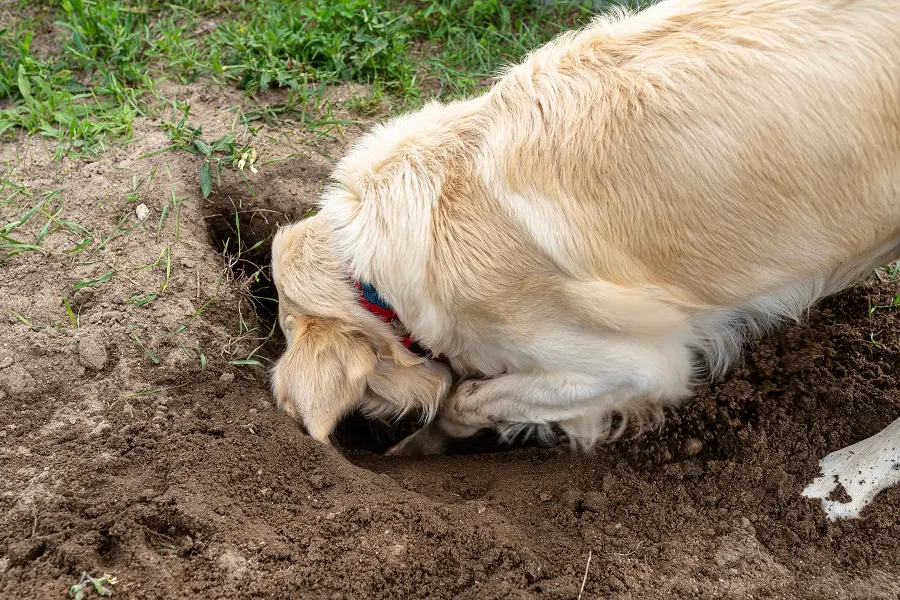
Every fence line tells a story of failed attempts to stop digging. Here's why those quick fixes never last.
- Cayenne pepper and deterrent sprays: These wash away with the first Chicago rain or morning dew. Dogs quickly learn the scent fades, and determined diggers will push through the temporary discomfort anyway.
- Chicken wire laid on the ground: Without proper anchoring, dogs simply push loose wire aside or dig next to it. The wire rusts within a season and becomes a tetanus hazard that hides in your grass.
- Rocks or bricks along the fence line: Dogs dig around obstacles or push them aside over time. Heavy stones sink into soft clay soil after spring rains, becoming useless, buried decorations.
- Store-bought dig barriers: Plastic barriers and roll-out mats shift with freeze-thaw cycles. Most aren't deep enough to stop motivated diggers who simply dig under or around them.
- Motion-activated sprinklers: Dogs learn the spray pattern within days and dig outside the sensor range. Winter renders them useless when pipes freeze.
The harsh truth is that these band-aid solutions fail because they don't address the fundamental problem — improper fence installation that invites escape attempts.
The Best Fence Materials for Dog Containment
The best fence for dogs depends on your pet's size, behavior, and your property's needs. Professional fencing companies understand that different materials offer distinct advantages for pet owners seeking long-term solutions.
Vinyl Fencing
Vinyl fences provide the ultimate solid barrier with minimal gaps at ground level when properly installed. On flat grade, small gaps may occur but are significantly smaller than other fence types. The smooth surface prevents climbing, and the material won't splinter or break when dogs jump against it. Vinyl fence panels come in privacy and semi-privacy styles, with the semi-privacy option featuring tighter picket spacing ideal for medium dogs.
Key advantage: Weather-resistant material requires minimal maintenance and lasts for 20-30 years without warping or creating new gaps.
Cedar Wood Fencing
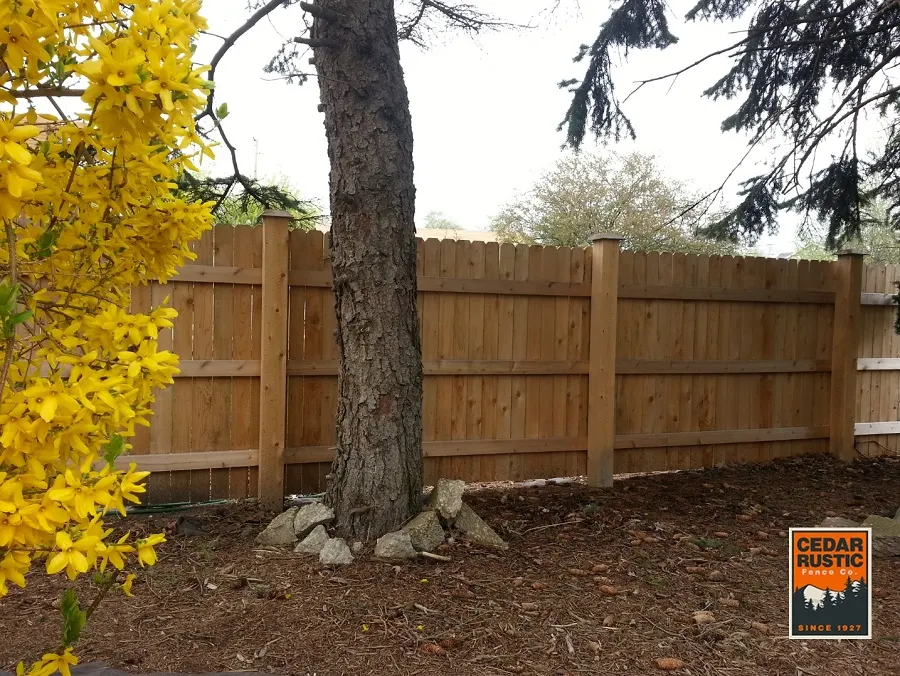
Cedar fences are naturally beautiful with excellent containment when built with tight picket spacing. The wood's natural oils resist decay without chemical treatment, important for pet owners concerned about their dog's health. Cedar is customizable for any spacing requirement, from solid privacy boards to tight-spaced pickets that prevent small dogs from squeezing through.
- Available in over 3,000 style combinations.
- Can be stained, but doesn't require it for weather protection.
Aluminum Fencing with Tight Spacing
Aluminum fences designed specifically for dogs feature puppy panels or tight spacing options with gaps under 3 inches. This rust-proof material works perfectly for small breeds and provides an elegant appearance for front yard applications. The vertical pickets eliminate horizontal rails that dogs could use to help climb.
Important note: Standard aluminum spacing won't contain small dogs — always specify puppy panel or tight-spaced fence configuration.
Chain Link Fencing
Chain link is affordable but requires modifications to keep dogs contained effectively. The see-through design can increase barking and escape motivation, as dogs see everything beyond their yard.
- Consider privacy slats to reduce visual triggers.
- Requires a bottom tension wire for dig prevention.
Critical Design Features for Dog-Proof Fencing
The right fence design prevents escape attempts better than trying to stop digging behavior after the fence is installed. Professional fence contractors like ours at Cedar Rustic understand that specific design elements create an impenetrable barrier when implemented correctly.
Choosing the right material is your first defense against escape artists, especially for dog owners dealing with persistent diggers.
Proper Ground Clearance
Tight-to-ground installation is non-negotiable to build an effective dog fence. The maximum gap should be 2 inches — anything more invites digging attempts from even small breeds. This requires careful ground preparation and sometimes leveling portions of your property to maintain consistent clearance along the entire fence line.
Appropriate Spacing Between Pickets
Vertical pickets must be spaced correctly for your dog's size. Standard picket fence spacing might seem fine until your small dog squeezes through. Your pet’s safety should always come first — tight spacing prevents heads getting stuck and bodies squeezing through.
Height Considerations
Fence height matters as much as ground clearance. While minimum heights vary by dog size, remember that motivated dogs can surprise you with their jumping ability, especially breeds like Siberian Huskies.
Choosing Fence Styles Based on Your Dog's Size and Behavior
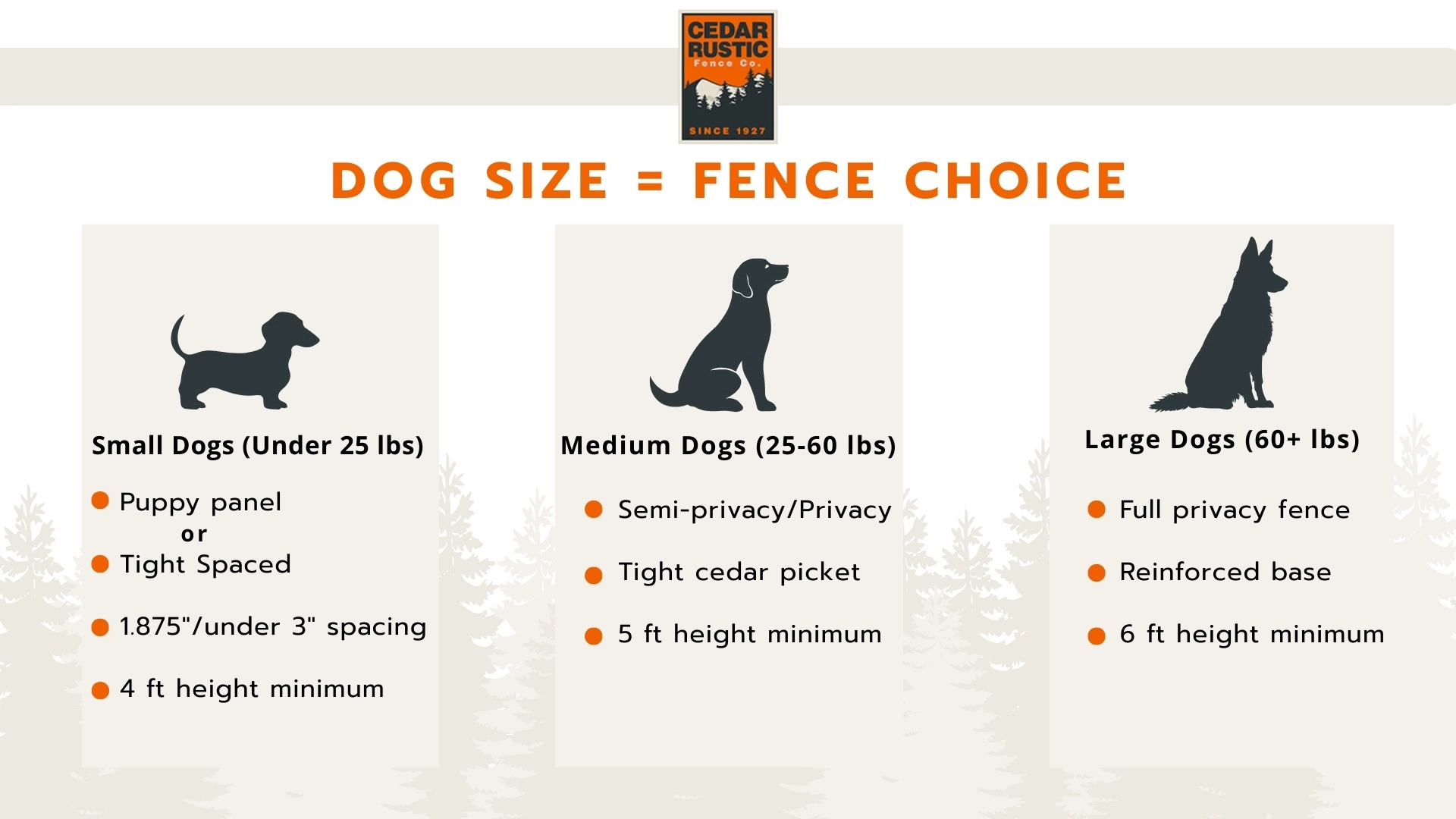
One fence style doesn't fit all — your dog's characteristics should drive your selection.
Small Dogs and Small Pets
Small dogs need aluminum with tight spacing or specialized puppy panels. These prevent squeeze-through escapes common with standard spacing. The tight vertical slats create an impenetrable barrier for small animals while maintaining your yard’s aesthetic appeal.
- Aluminum puppy panels offer elegance with security.
- Vinyl options with tight spacing work for dogs under 25 pounds.
Medium-to-Large Breeds
Medium dogs work well with vinyl semi-privacy featuring tighter picket spacing or tight-spaced cedar options. Large breeds need serious containment — full privacy fences that eliminate visual triggers and provide a solid fence barrier against jumping attempts.
Special Considerations for Barkers
Dogs that bark at everything benefit from privacy fences that block visual triggers. Solid vinyl or cedar panels reduce fence-line aggression with neighbors' pets and create a calmer environment. You can mix and match fence types — using privacy along busy areas and less expensive options for quieter boundaries.
If Your Dog Can Open Gates
Don’t underestimate your dog’s intelligence, as some dogs learn to lift standard gate latches within days of watching humans operate them. Installing self-closing hinges with spring-loaded mechanisms ensures gates shut automatically behind you. Add a keyed lock or magnetic child-safety latch mounted high on the gate where dogs can't reach, even when jumping.
Pro tip: Double-sided locks prevent escape artists from nosing gates open from either direction, while gravity latches automatically secure when gates close.
Installation Techniques That Prevent Escape Attempts
Professional fence installers like ours understand the difference between standard installation and dog-proof installation.
Professional Installation Advantages
Experienced fence installers ensure consistent fence-to-ground contact along your entire perimeter. They work with Chicago's clay soil conditions, accounting for settling and seasonal ground movement. DIY installations often leave gaps that dogs exploit within weeks.
- Most residential fences are installed in one day once work begins.
- The full project timeline extends up to two weeks based on scheduling and weather.
Gate Installation Details
Gates require extra attention since they're the weakest point in any dog fence. Professional installers use heavy-duty hinges rated for the gate's weight, preventing sagging that creates bottom gaps over time. The latch mechanism gets mounted at least 48 inches high, out of jumping reach for most dogs.
- Installers test every gate by pushing from both sides to ensure latches catch properly.
- Metal threshold strips prevent dogs from digging under gate openings.
Limitations of DIY Reinforcement
Can you install a dog-proof fence yourself? While the answer is technically yes, success requires multiple "buts" that often make professional installation the smarter choice. You'll need to rent an auger for proper post holes, but hitting one underground utility line costs thousands in repairs.
It may seem simple to set posts perfectly straight, but without proper tools, you'll likely end up with a wavy fence line that creates gaps. The average DIY fence shows gaps within the first year, while professional installation maintains proper clearance for decades.
The bottom line is that professional installation costs more upfront, but prevents years of escape-related headaches and repeated repair attempts.
When to Consider Reinforcement Options

Some situations call for additional reinforcement beyond standard installation.
L-Footer Wire Systems
For dogs who are extreme diggers, L-footer wire systems create an underground barrier. Wire mesh extends from the fence base and bends inward underground, hitting your dog's paws when they dig. This works best as an add-on for existing fences with persistent dig problems.
Buried Hardscape Options
Concrete pavers or landscape blocks placed along the fence line create a physical barrier against digging. These are ideal to use in areas where dogs repeatedly target the same spots. Installation requires digging a shallow trench and placing materials flush against the fence base.
Interior Barrier Systems
A secondary decorative fence installed 2-3 feet inside your main fence can help remove the motivation to dig. Dogs can't reach the main fence to start digging, and the visual barrier reduces their interest in what's beyond.
Chicago-Specific Considerations for Dog Fencing
Local conditions significantly impact fence performance and your ability to keep dogs from digging under fence installations. Here are some considerations Chicago residents should keep in mind.
Clay Soil Challenges
Chicago's clay soil creates unique problems for fence stability. During wet springs, it becomes soft enough for easy digging, but in dry summers, it pulls away from fence posts and creates gaps. Professional installation accounts for these seasonal changes through proper drainage and post-setting techniques.
Freeze-Thaw Cycle Effects
Our winters cause ground heaving that can lift fence posts and create new gaps. Properly installed fences use concrete footings below the frost line, preventing this movement. This is especially critical for maintaining the tight ground clearance needed to contain dogs.
Local Regulations
Chicago area municipalities have specific requirements for fence height and placement. While homeowners must verify local requirements themselves, working with an experienced fence contractor ensures your installation meets standard requirements.
Note: Most areas allow 6-foot privacy fences in backyards but restrict front yard heights to 4 feet.
Investment Protection: Choosing Quality That Lasts
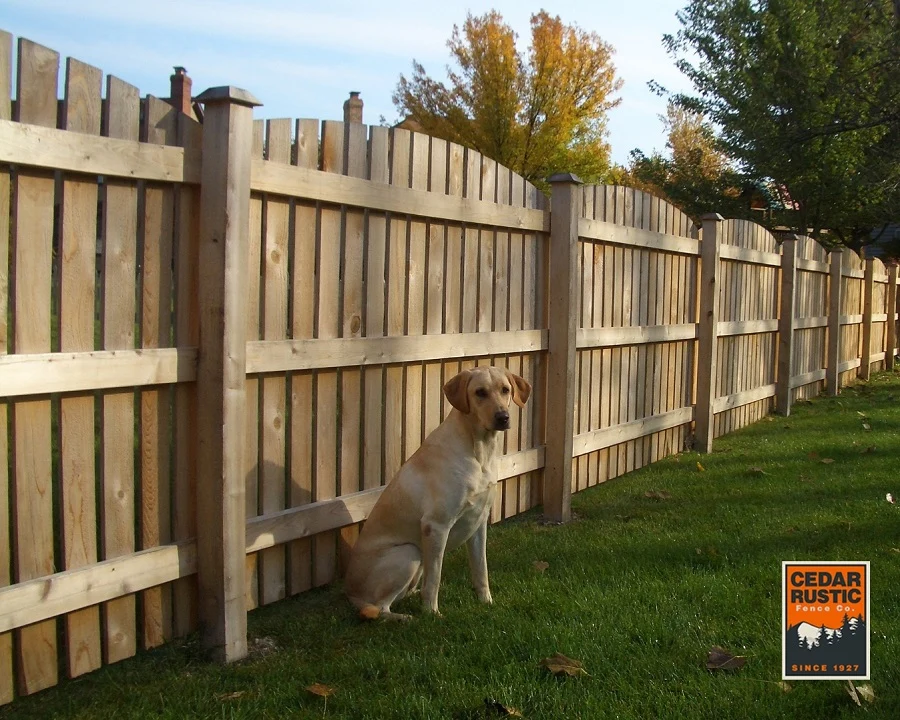
It may cost more up front to install a quality fence, but in the long term, it saves money.
Long-Term Value Analysis
Compare the cost of professional installation versus ongoing DIY fixes. A properly installed fence lasts 15-20 years with minimal maintenance. Temporary solutions require constant attention and replacement, often exceeding professional installation costs within 3-5 years. Don’t forget to factor in how your dog’s expenses factor in.
- One emergency vet visit from an escaped dog: $500-2000.
- Property damage from repeated escape attempts: $200-500 annually.
- Professional fence installation: One-time investment with warranty protection.
Material Durability Comparison
Vinyl fences offer the longest lifespan with virtually no maintenance required. Cedar provides natural beauty but needs periodic care. Aluminum fencing resists rust and works well for small dogs, but may not be ideal for containing all dogs.
Warranty and Service Support
Professional installation includes warranty coverage that DIY projects lack. Cedar Rustic's service department handles any issues that arise, protecting your investment and ensuring your fence continues providing effective containment.

