


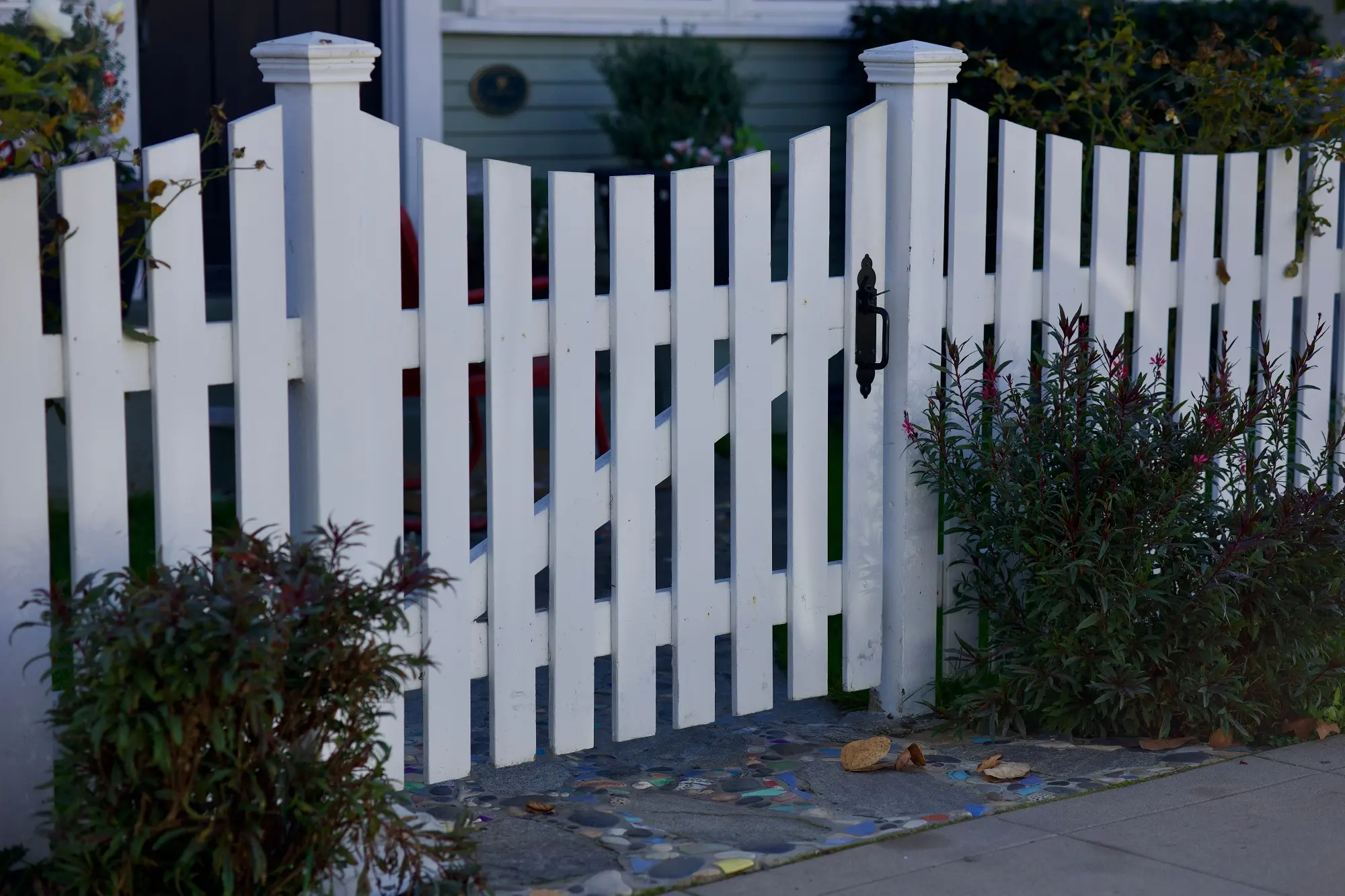


Your driveway is the first impression that visitors get of your home. A poorly planned fence can clash with your landscape, block sightlines, or create an unwelcoming entrance that diminishes your property's appeal.
Professional Chicagoland fence installers like ours at Cedar Rustic Fence Co. know that driveway fencing requires careful planning to balance aesthetics with functionality. These five front yard fence ideas with driveway integration will transform your entrance into a welcoming focal point.
Why Driveway Fencing Differs from Backyard Fencing
Driveway fences face unique challenges that backyard installations don't encounter. The fence must coordinate with your home's architecture, maintain street visibility for safe vehicle access, and withstand constant exposure to weather and road debris.
Visibility Requirements
Most municipalities require clear sightlines at driveway entrances. Fences that are too tall or solid near the street can create safety hazards and code violations.
Material Durability Concerns
Road salt, vehicle exhaust, and debris take a toll on fence materials near driveways. Cedar naturally resists moisture damage, while vinyl won't corrode from salt exposure like some metals.
Design Coordination
Your driveway fence should complement both your home's style and existing landscape features. A mismatched fence grabs attention for the wrong reasons and can decrease property value.
Classic White Picket Fence with Driveway Integration
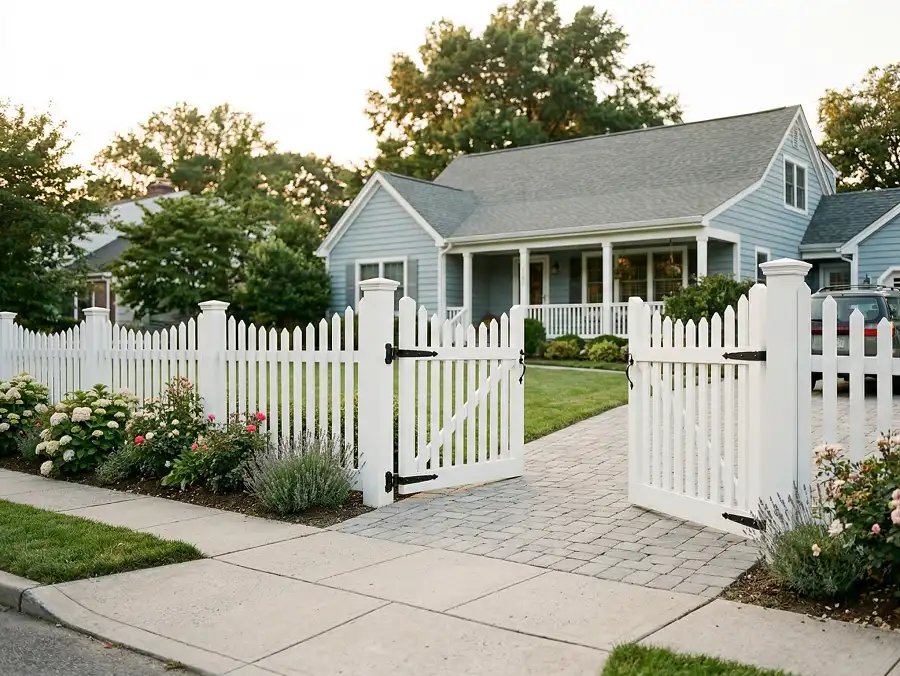
The traditional white picket fence remains popular for good reason. It’s a timeless style that creates an inviting entrance while clearly defining property boundaries without blocking views.
Height and Spacing Considerations
Keep picket fences between 3-4 feet tall along driveways to maintain visibility. Wider picket spacing (2-3 inches) allows better airflow and creates a more open feel than tightly spaced designs.
Pro tip: Install wider gate openings (at least 12 feet) for driveways to accommodate larger vehicles and delivery trucks.
Material Options for Longevity
- Vinyl picket fencing: Never needs repainting and resists yellowing from road grime. Plus, most manufacturers offer lifetime warranties on material integrity.
- Cedar picket options: Natural wood grain adds warmth that vinyl can't replicate. Cedar's natural oils repel moisture without the need for chemical treatment.
Modern homeowners appreciate that vinyl isn’t difficult to maintain, as it only requires hosing down occasionally. Cedar, on the other hand, develops a beautiful silver-gray patina that many find even more attractive than fresh wood.
Modern Horizontal Slat Fence Design
Horizontal board fencing complements contemporary homes beautifully, creating clean lines and architectural interest. This style works particularly well when you want partial privacy without completely blocking your home from view.
Board Width and Gap Selection
Horizontal slats typically use 1x6 or 1x8 boards with 1-2 inch gaps between them. Narrower gaps provide more privacy, while wider spacing emphasizes the modern aesthetic and maintains better airflow.
Complementary Gate Styles
Match your gate design to the horizontal pattern for a cohesive look. Many homeowners choose automated sliding gates for wider driveways, eliminating the swing clearance that traditional gates need.
Important note: Horizontal fencing costs 15-25% more than vertical styles due to additional bracing required to prevent sagging over time.
The extra investment delivers a distinctive look that significantly boosts curb appeal and sets your property apart from neighboring homes.
#cta_start
Transform Your Driveway into
a Stunning Entrance
Our expert Chicagoland fence installers have nearly 99 years of experience creating beautiful, functional driveway fences. We handle design, permits, and professional installation for lasting curb appeal.
#cta_end
Semi-Privacy Shadowbox Fence Arrangement
Shadowbox fencing provides an elegant compromise between full privacy and open picket styles. The alternating board pattern looks attractive from both sides, making it ideal for front yards where appearance matters from every angle.
Strategic Height Transitions
Start with 4-foot sections near the driveway, transitioning to 6-foot heights as the fence moves toward the backyard. This gradual increase is still visible from the street, while providing more privacy closer to your home.
Placement strategy:
- Position taller sections at least 15 feet from the driveway entrance.
- Use decorative post caps to mark the transition points.
- Maintain consistent board spacing throughout for visual unity.
Color and Finish Choices
Natural cedar weathers to an attractive gray, or choose to stain it for color consistency. Dark stains create dramatic contrast against light-colored homes, while lighter stains complement traditional brick or stone exteriors.
This versatile design works with virtually any architectural style and provides year-round aesthetic appeal without overwhelming your landscape.
Aluminum Ornamental Fence with Decorative Elements
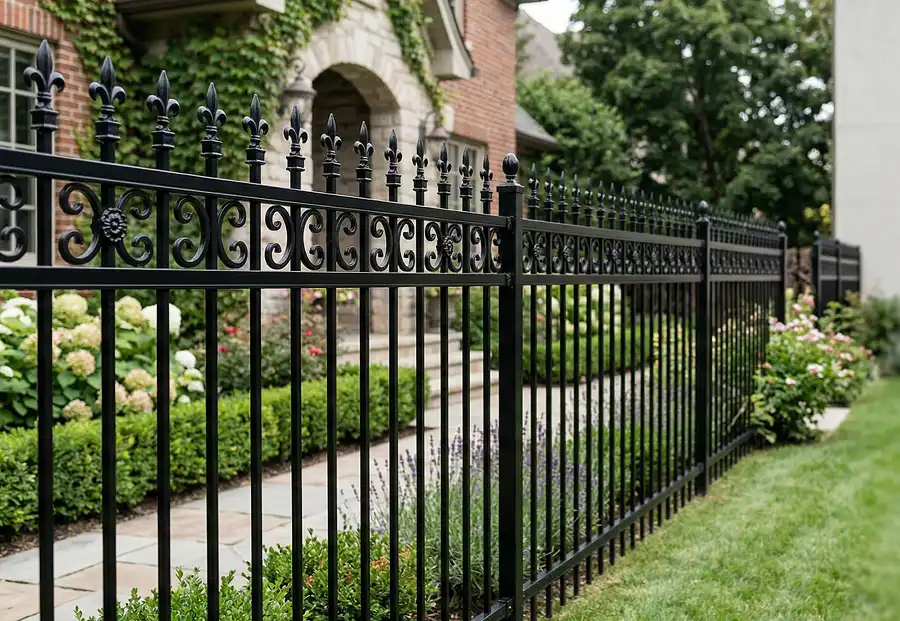
Aluminum fencing delivers the elegant look of wrought iron without the maintenance headaches or rust concerns. These fences work beautifully with brick columns or stone pillars flanking driveway entrances.
Spear Top vs. Flat Top Styles
Spear-point tops create a formal, traditional appearance that suits colonial and Victorian homes. Flat-top designs offer a cleaner look for contemporary architecture while maintaining the same security benefits.
Integrating Masonry Elements
To create impressive focal points, consider brick or stone columns at the driveway entrance. The columns support larger gates and provide mounting points for lighting or address numbers.
Cost considerations: Aluminum fencing typically runs $25-40 per linear foot installed, while adding masonry columns increases costs by $800-1,500 per column, depending on height and materials.
The combination of aluminum and masonry creates a high-end appearance that can significantly boost your property value and curb appeal.
Mixed Material Fence with Wood and Metal
Combining materials creates unique designs that showcase both natural warmth and modern durability. Cedar frames with metal infill panels offer the best of both materials.
Popular Material Combinations
Cedar posts and rails with aluminum framing or decorative metal panels create an open, contemporary look. You can also pair wood privacy sections with decorative metal accents for added visual interest.
Maintenance Requirements for Each Material
- Cedar components: Apply water-repellent stain every 2-3 years to maintain color.
- Metal elements: Rinse annually to remove road salt and debris.
- Hardware: Use stainless steel fasteners to prevent corrosion and staining.
This approach lets you customize the design to match your home's style while incorporating durable materials that withstand driveway exposure.
Planning Your Driveway Fence Installation
Successful driveway fence projects require more attention to detail than standard installations. Understanding these planning elements helps avoid costly mistakes and ensures your fence meets both aesthetic and functional requirements.
Measuring and Layout Considerations
When measurements are accurate, it prevents ordering errors and installation delays. Mark utility lines before any digging, and verify property boundaries to avoid encroaching on easements or neighboring property.
Critical measurements:
- Driveway width at the street (add 2 feet for comfortable clearance)
- Distance from driveway edge to planned fence line
- Height restrictions per local codes (typically 4 feet maximum in front yard setback areas)
Working with Local Building Codes
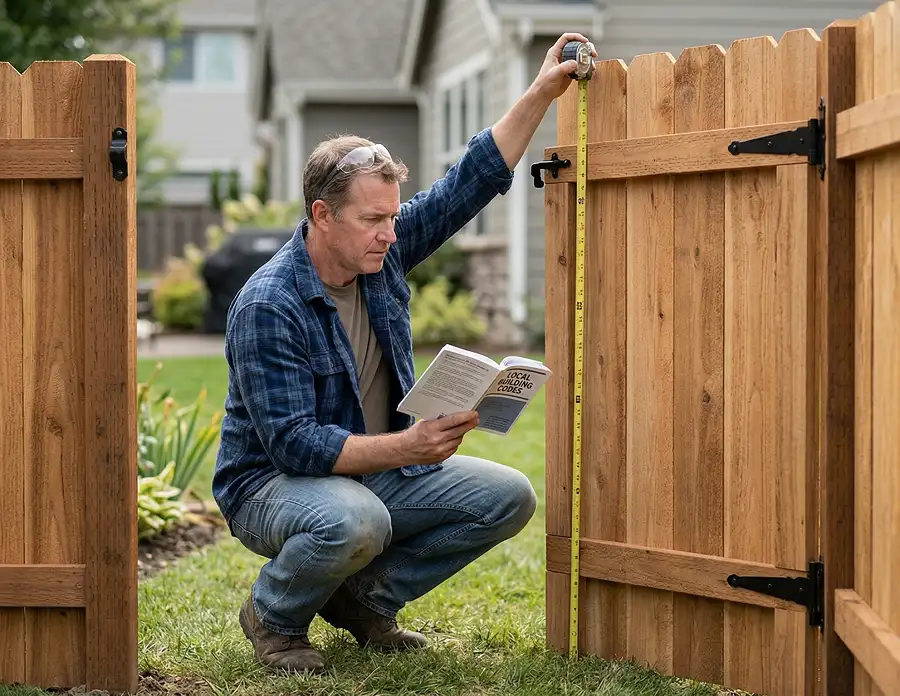
Most municipalities require permits for fences over 4 feet tall or located in front yard setbacks.
Code requirements often specify:
- Minimum setback distances from property lines
- Maximum heights in various yard zones
- Gate swing directions and clearances
- Visibility triangle requirements at street corners
Selecting the Right Gate System
Driveway gates must balance security, convenience, and aesthetics. Manual swing gates work well for narrower driveways, while automated systems make sense for wider entrances or when daily convenience matters.
Gate options:
- Single swing gates: Best for driveways up to 14 feet wide.
- Double swing gates: Handle driveways 14-24 feet wide with better weight distribution.
- Sliding gates: Ideal where swing clearance is limited, but they require level ground and about 1.5× the gate opening for the gate to slide.
Automated openers are more ideal if you frequently enter and exit, especially during the winter months when leaving your vehicle becomes inconvenient.

