


Choosing the right fence for your pool isn't just about meeting code requirements — it's about creating a safe space where your family can enjoy summer days and make memories without worry. The wrong choice leaves you with constant maintenance headaches, or worse, a fence that fails when you need it most.
As experienced Chicagoland pool fence installers, we help homeowners navigate material options, safety requirements, and design choices that work with Illinois weather. Let's explore the pool fence styles that deliver both protection and curb appeal.
Pool Fence Material Options
Different materials handle Chicagoland's weather extremes differently. This isn’t a choice you should take lightly, as it impacts maintenance time, longevity, and overall cost over the fence's lifetime.
Aluminum Pool Fences
Aluminum combines the elegant look of wrought iron with modern durability and zero rust concerns. These fences withstand Illinois winters without the maintenance headaches of traditional metal.
- Weather performance: Won't rust, corrode, or need repainting even after harsh winters.
- Maintenance requirements: Occasional soap-and-water cleaning keeps them looking new.
- Safety features: Narrow picket spacing meets code requirements while maintaining visibility.
- Cost considerations: Higher upfront investment pays off through decades of maintenance-free performance.
Aluminum is the most popular choice for pool fencing in the Chicago area because of its durability in our climate extremes.
Vinyl Pool Fencing
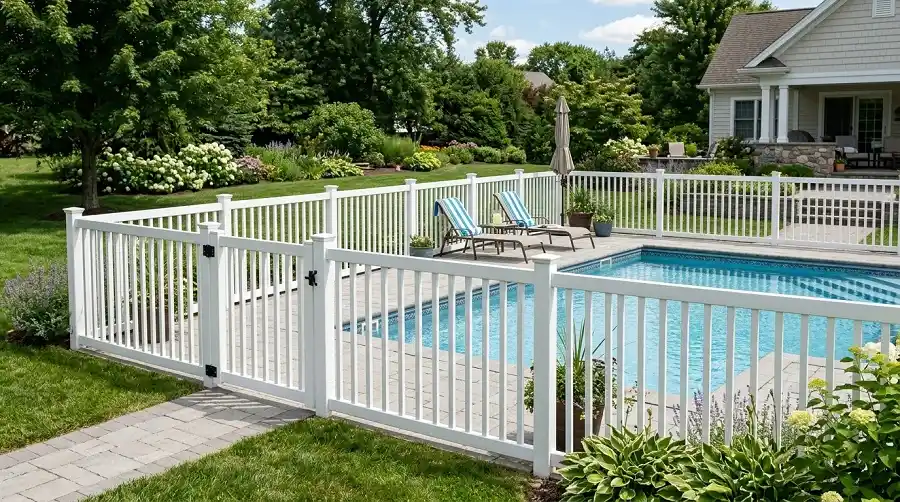
Vinyl offers privacy-focused designs that never need painting or staining. Modern vinyl formulations resist Illinois temperature swings without cracking or warping.
- Privacy options: Solid panels create seclusion around your pool area.
- Color stability: Won't fade even under constant summer sun exposure.
- Installation speed: Pre-assembled panels mean faster project completion.
- Long-term value: Lifetime material warranties provide peace of mind.
Cedar Pool Fences
Cedar brings natural beauty and customization potential to pool areas. The wood's natural oils provide inherent rot resistance, although this option requires more attention than synthetic options.
- Aesthetic appeal: Warm, natural appearance complements traditional home styles.
- Customization: Easily modified for unique layouts or decorative elements.
- Maintenance reality: Occasional cleaning is sufficient; staining is optional to preserve color.
- Climate considerations: Handles moisture well but shows weathering over time.
Pool Fence Styles That Balance Safety and Design
The right style depends on your priorities — complete privacy, unobstructed views, or finding a middle ground between the two.
Privacy Pool Fence Designs
Complete privacy fences create secluded retreats while meeting pool safety requirements. Solid panels block sightlines from neighbors and passing traffic.
Vinyl and cedar work best for privacy designs. Vinyl panels don’t require maintenance, while cedar provides natural warmth with customizable heights and patterns. Both materials offer privacy and structural integrity around pool areas.
Ornamental Pool Fencing
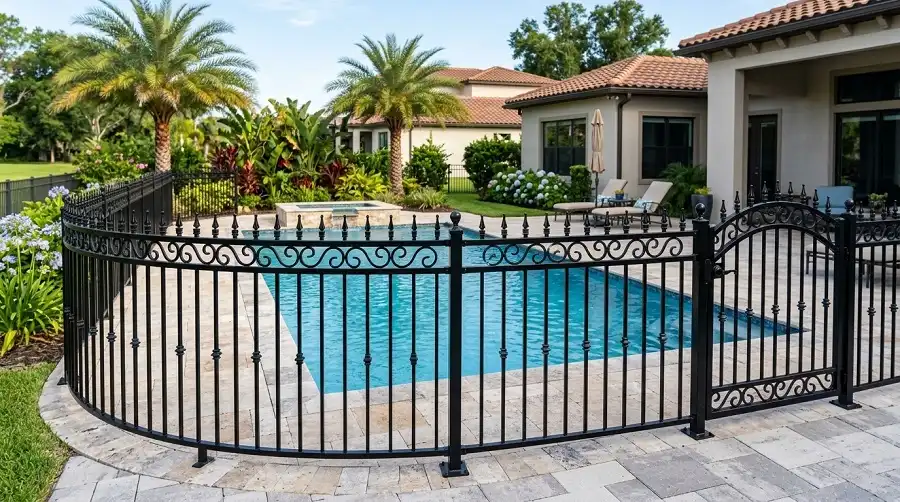
Decorative aluminum fencing maintains visibility while still establishing clear boundaries. It has a see-through design that lets parents monitor pool activity from inside the house.
Popular ornamental styles include traditional spear-top pickets, modern flat-top rails, and decorative finials. Black powder-coating remains the most requested finish, though bronze and white options complement different home exteriors. These fences meet code requirements while still preserving your yard's open feel.
Semi-Privacy Options
Semi-privacy fencing splits the difference between complete seclusion and full visibility. Shadowbox designs alternate pickets on both sides, creating partial visibility while maintaining pool area definition.
Swimming Pool Privacy Fence Ideas for Complete Seclusion
If you want to turn your backyard into a true escape, consider privacy-focused pool fences. With strategic design choices, you can maximize seclusion without sacrificing airflow or creating a boxed-in feeling.
Full-Height Privacy Panels
Six-foot solid panels provide maximum privacy around your pool area. Vinyl excels here — panels won't warp, fade, or require maintenance despite constant moisture exposure from pool splashing and Illinois humidity.
Consider spacing the posts every six to eight feet for structural integrity. Closer spacing handles wind loads better, but increases material costs. At Cedar Rustic, our installation teams adjust post placement based on your property's wind exposure and soil conditions.
Privacy with Decorative Tops
Combining solid lower panels with decorative upper sections is aesthetically pleasing while maintaining privacy where it matters most. Lattice tops or scalloped designs soften the fence line without compromising pool area seclusion.
This approach works especially well with neighbor-friendly fence designs, creating privacy for you while keeping the fence visually appealing from both sides.
Types of Pool Fences by Function
Your pool fence serves specific purposes beyond aesthetics. Matching fence type to function ensures it performs as needed throughout its lifetime.
Safety-First Pool Barriers
Safety-focused fences prioritize code compliance and child protection over visual appeal. Aluminum works best here — narrow picket spacing prevents climbing while maintaining visibility.
Critical safety features include:
- Self-closing gates with child-resistant latches positioned high on gate frames;
- Picket spacing under four inches to prevent head entrapment;
- Minimum 48-inch height with no horizontal rails that children can use as footholds;
- Gates that swing away from the pool area for a safer emergency exit.
Pet-Friendly Pool Fencing
Pool fences that accommodate pets need smaller spacing at ground level and durable materials that withstand scratching. Dog fence designs translate well to pool applications.
Choose aluminum with puppy-picket spacing — closer pickets at the bottom prevent small dogs from squeezing through. Vinyl works too, though determined diggers may scratch the surface over time. Avoid chain-link around pools; pets can climb it, and the utilitarian look clashes with most pool landscaping.
Cost Factors for Different Pool Fence Materials
To set a realistic budget, you’ll want to understand pool fence costs. Material choice drives initial expense, but long-term costs tell the complete story.
These ranges reflect professionally installed fences, including all hardware, gates, and labor. Budget-conscious homeowners often choose aluminum because it balances affordability and performance.
Prices vary based on fence height, gate number, and site conditions. Rocky soil or sloped terrain increases installation costs regardless of material choice.
What Affects Your Pool Fence Investment?
Several factors beyond material choice impact your pool fence project cost. Being aware of these factors helps avoid budget surprises during planning.
Site Preparation Requirements
Existing landscaping near the fence line adds removal costs. Tree roots, buried utilities, or rocky soil require special equipment and extra labor. Sloped terrain demands stepped or racked fence installation, which takes more time than level ground installation.
Gate Configuration
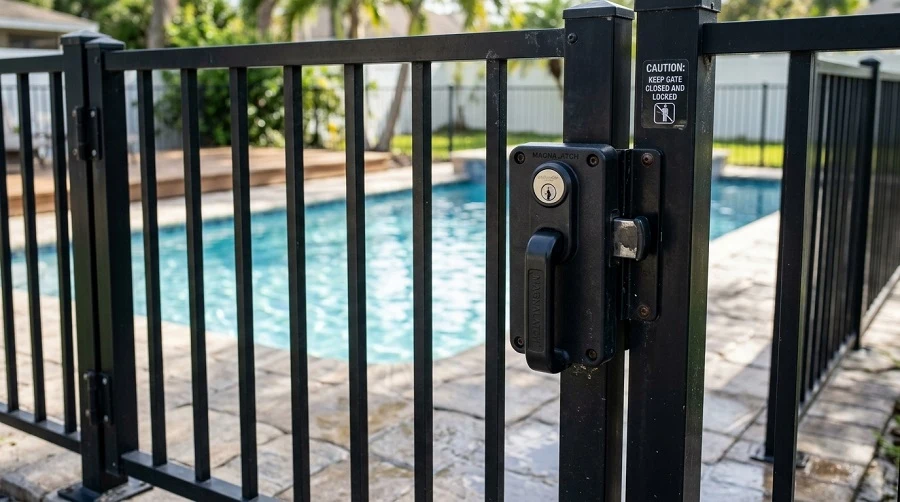
Each gate adds $200-600 to project costs, depending on size and hardware quality. Pool fences typically need at least one walk-through gate, though many homeowners add a second for convenience. Self-closing hinges and child-resistant latches are non-negotiable for code compliance but increase gate costs.
Permitting and Inspection
Most Illinois municipalities require permits for pool fence installation. Permit fees range from $50-150, depending on the location. Some professional installers handle permit applications and schedule required inspections, preventing delays from paperwork errors.
Warning signs of poor installation include wobbly posts, uneven spacing, or gates that don't latch properly. These issues are a red flag that corners were cut, and they can compromise safety and longevity.
Choosing the Right Pool Fence for Your Family
Your family’s ideal pool fence should balance safety requirements, maintenance preferences, and budget realities. Most Chicagoland families prioritize different factors based on their situation.
Families with young children typically choose aluminum — its see-through design allows supervision from inside the house while meeting all safety codes. The durability and low maintenance mean parents spend time with kids instead of fence upkeep.
Homeowners who want maximum privacy lean toward vinyl. Solid panels create complete seclusion for changing or relaxing poolside. The maintenance-free nature appeals to busy families who want their fence to simply work without attention.
Budget-conscious buyers often select cedar for its lower initial cost and natural appearance. Those willing to invest time in occasional maintenance appreciate cedar's warmth and customization options. Just remember, Illinois weather requires quality installation — posts must go deep enough to prevent frost heaving.

