


Choosing the right color for your vinyl fence affects more than just curb appeal. The shade you select impacts how your outdoor space feels, how well it hides dirt, and even how long the fence maintains its appearance under harsh Chicagoland weather conditions.
Finding the perfect vinyl fence color means balancing style preferences with practical considerations like maintenance and climate factors. Chicagoland vinyl fence installers like ours at Cedar Rustic Fence Co. are here to help homeowners navigate color options that complement their property while standing up to Midwest weather extremes. Explore this guide to learn about everything from trending 2026 shades to how color choice affects fence performance.
What's the Best Color for a Vinyl Fence?
It’s no surprise that white remains the most popular choice; it creates a clean, classic look that brightens spaces and makes yards feel larger. However, neutral tones like tan and gray have surged in popularity for their ability to hide dirt and match modern architectural styles. The ideal color complements your home without overwhelming other design elements, while requiring minimal maintenance to stay looking fresh.
2025-2026 Vinyl Fence Color Trends
Currently, we’re seeing trends that reflect broader design movements toward natural materials and understated elegance:
Trending Color Directions
- Soft neutrals leading: White, tan, khaki, and gray remain the most common choices for new installations.
- Two-tone combinations: Pairing different colors for posts and panels creates custom looks.
- Natural wood tones: Coastal cedar and weathered oak finishes are growing in popularity.
Modern fence design emphasizes blending with natural surroundings rather than creating stark boundaries. The trend toward earth tones reflects homeowners' desire for outdoor spaces that feel like extensions of interior design rather than utilitarian barriers.
White Vinyl Fences: The Timeless Classic
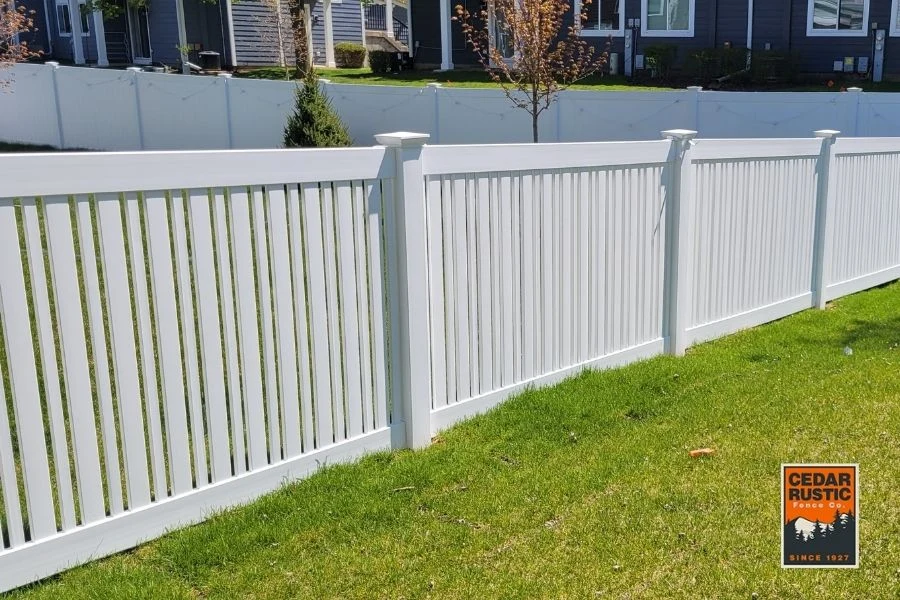
For residential properties, white vinyl fencing remains the gold standard. This traditional color creates a bright, welcoming appearance that makes outdoor spaces feel more open and spacious.
Why Homeowners Love White Vinyl
- Universal appeal: Complements any architectural style, from Victorian homes to modern ranch designs.
- Enhances landscaping: Creates a striking contrast with greenery, making plants and flowers pop.
- Reflects heat: Stays cooler than darker colors, reducing expansion and contraction.
- Shows maintenance needs: Makes it obvious when cleaning is needed, helping maintain a pristine appearance.
White vinyl fences are ideal for properties where a classic, clean aesthetic takes priority. The bright color maintains its appeal across decades, making white the safe choice for homeowners concerned about timeless value. However, white shows dirt and mildew more readily than earth tones, requiring more frequent cleaning in areas with heavy pollen or moisture.
Tan and Beige Vinyl Fences: Warm Neutrals
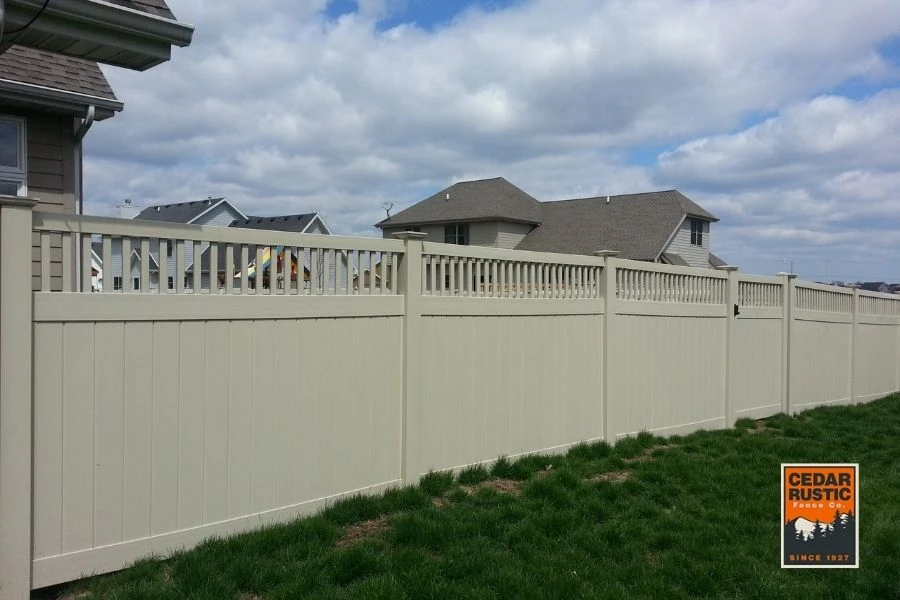
Tan and beige vinyl fence colors are another popular option, as they offer warmth without the high maintenance of white. These neutral tones blend seamlessly with natural surroundings, while providing enough contrast to define property boundaries.
Benefits of Earth-Tone Fencing
- Hides dirt effectively: Soil splashes and pollen residue blend into the color rather than standing out.
- Complements brick homes: Matches warm tones in traditional brick and stone exteriors.
- Creates a cohesive look: Unites outdoor elements without competing for attention.
Tan fencing works particularly well for properties with natural landscaping, earth-tone siding, or brick exteriors. The warm color feels inviting while maintaining a more relaxed vibe than stark white. Vinyl fence design ideas often feature tan options for homeowners in search of low-maintenance color choices.
Gray Vinyl Fences: Modern Sophistication
Gray vinyl fencing delivers contemporary appeal with sophisticated style. We’ve seen this neutral shade gain significant popularity in recent years as modern architectural styles emphasize clean lines and minimalist aesthetics.
Gray Fence Advantages
- Modern aesthetic: Perfectly complements contemporary homes with metal accents and stone features.
- Disguise weathering: Light gray shows less fading and discoloration over time.
- Versatile pairing: Works with both warm and cool color schemes.
- Professional appearance: Creates a polished look for properties with modern landscaping.
Gray vinyl fences suit contemporary homes, urban properties, and neighborhoods with architectural variety. The color provides enough distinction to define boundaries while maintaining understated elegance. Lighter grays hide imperfections better than white, while charcoal shades create dramatic contrast with greenery.
Wood-Grain Vinyl Fences: Natural Beauty Without Maintenance

Wood-grain vinyl fences combine the authentic appearance of natural cedar with vinyl fence pros like zero maintenance and lasting durability. These textured options feature realistic grain patterns in various shades.
Popular Wood-Grain Shades
At Cedar Rustic Fence Co., our available wood-grain options include:
- Coastal cedar: Light tan with subtle grain creates a beachy, relaxed aesthetic.
- Dark walnut: Rich brown tones deliver a traditional wood fence appearance.
- Natural oak: Medium brown balances warmth with neutral versatility.
Wood-Grain Considerations
Due to specialized manufacturing processes, wood-grain vinyl costs more than solid colors. The textured surface shows weathering differently from smooth vinyl, and darker wood tones absorb more heat. These fences work best for homeowners who want natural wood aesthetics without staining, sealing, or replacing rotted boards every few years.
Note: While wood-grain vinyl mimics real cedar appearance, it lacks the natural aroma and organic variation of authentic cedar fencing options.
Black and Dark Vinyl Fences: Bold Statements
Craving something that will make a splash? Black vinyl fencing creates a dramatic impact with modern homes and contemporary landscapes. This bold color choice makes a statement while providing a striking contrast against greenery.
Important Considerations for Dark Fences
Heat absorption concerns: Black and dark brown vinyl fences absorb significantly more heat than lighter colors. In direct sunlight, dark vinyl can become extremely hot and may experience:
- Faster color fading from intense UV exposure
- Increased expansion and contraction stress
- Potential warping in panels without proper reinforcement
- Reduced material lifespan compared to lighter shades
Climate matters: Dark vinyl fences perform poorly in sunny regions with high temperatures. Unless you live in consistently overcast areas like the Pacific Northwest, you should consider dark colors carefully. For Chicagoland properties with southern exposure, we recommend lighter alternatives, as they deliver better long-term performance.
Vinyl Fence Features and Cost Considerations
Vinyl fence cost in Illinois typically ranges from $24 to $60 per linear foot installed, with color affecting the final price:
- Standard white picket fence (4 feet): $24-$43 per linear foot.
- Privacy fence in white or tan (6 feet): $40-$60 per linear foot.
- Premium wood-grain colors (6 feet): $60-$80+ per linear foot.
- Custom two-tone combinations: $65-$85 per linear foot.
Material Quality Factors
- Virgin vinyl colors maintain their appearance longer and resist fading better than recycled vinyl options.
- UV-resistant additives in quality vinyl prevent color degradation from sun exposure.
- Thicker panels in darker colors reduce heat-related warping issues.
To give you a better idea of cost, most homeowners in Chicagoland spend between $2,600 and $6,500 for a complete vinyl fence installation, with color being just one factor in the total cost.
You can find exotic colors like red, blue, or green, but they remain rare for good reasons. These bold shades require specialized manufacturing, cost significantly more, and create resale challenges since they appeal to limited audiences. Bright colors also tend to fade faster than neutral tones.
Note: While some manufacturers advertise extensive color palettes, availability varies regionally. Always verify local options with experienced fence contractors before finalizing design plans.
Does Vinyl Fence Color Affect Durability?
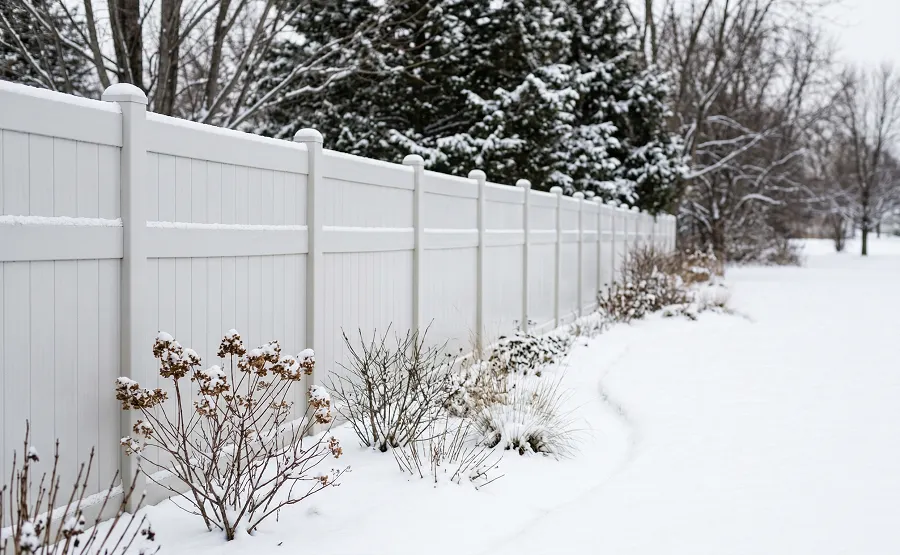
Color selection directly impacts how well your vinyl fence withstands weather and maintains its appearance over time:
Color and Performance Connection
Lighter colors win for longevity: White, tan, and light gray vinyl fences typically last longer and maintain their appearance better than dark options. These shades reflect rather than absorb heat, reducing thermal stress on materials.
Dark colors face challenges: Black, dark brown, and charcoal vinyl absorb heat intensely. This creates several problems:
- Accelerated UV damage causes premature fading
- Heat expansion can warp panels or stress connections
- Color consistency becomes harder to maintain
- Replacement panels may not match faded originals
Quality matters more than color: Premium vinyl with UV inhibitors and stabilizers resists fading regardless of shade. However, even the best dark vinyl won't match the durability of quality light-colored fencing in sunny climates.
Matching Vinyl Fence Colors to Home Exteriors
Coordinating fence color with your home's exterior creates cohesive curb appeal:
- Traditional homes: White vinyl fences complement classic architectural details and formal landscaping. These timeless colors enhance rather than compete with period features.
- Contemporary houses: Gray tones in various shades work beautifully with modern materials like stone, metal, and stucco. Consider charcoal accents for dramatic flair.
- Ranch and craftsman styles: Tan and beige vinyl fencing suits these mid-century designs, especially when paired with natural wood trim and earth-tone exteriors.
- Brick exteriors: Match the vinyl fence color to mortar (typically tan or gray) rather than brick for a harmonious appearance. This creates subtle coordination without an exact match.
Consider how vinyl fences impact property value based on how well the color choice complements the overall aesthetics. When a fence clashes with your home’s style, it can detract from curb appeal rather than enhance it.

