


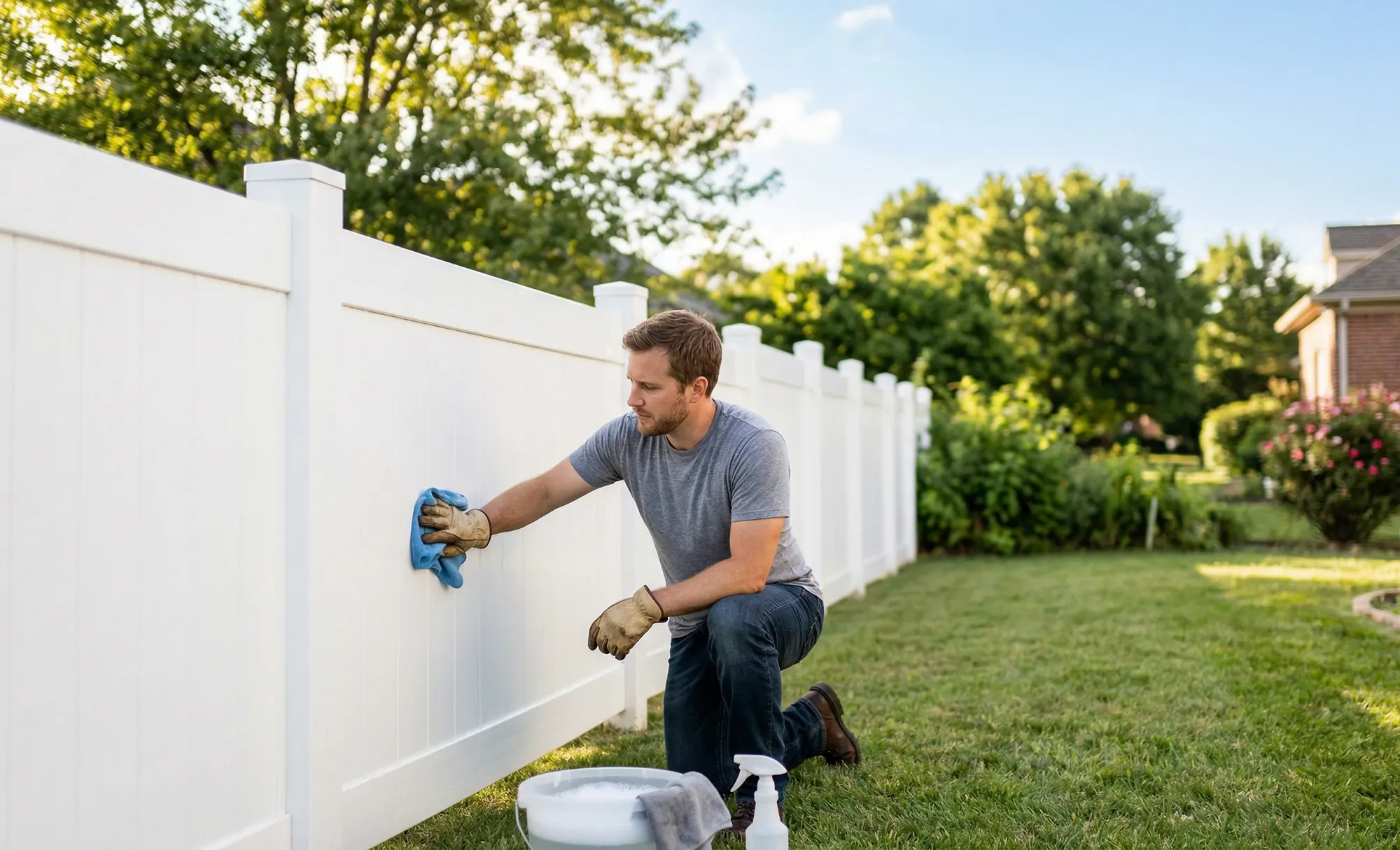


Picture this scenario: your vinyl fence looked pristine when first installed, but now dirt, mildew, and grime have dulled its appearance. Sound familiar? The solution is regular cleaning; it keeps your fence looking new while protecting your investment for decades.
As one of Chicagoland's most experienced vinyl fence installers, our team at Cedar Rustic Fence Co. has seen how proper maintenance preserves fence beauty for decades. This guide shares proven cleaning methods that protect your investment without causing damage.
Essential Tools and Supplies
Before you start cleaning, gather your supplies to ensure the process is efficient and effective.
Basic Cleaning Arsenal
- Garden hose with spray nozzle for initial rinsing and final cleanup
- Soft-bristle brush or sponge to scrub without scratching the surface
- Microfiber cloths for wiping down smaller sections and detailed work
- Bucket for mixing cleaning solutions
- Work gloves to protect your hands from cleaning agents
Cleaning Solutions
- Mild dish soap mixed with warm water for routine cleaning
- White vinegar (diluted 1:4 with water) for stubborn stains and mildew
- Oxygen bleach (1 part to 5 parts water) for heavy-duty mold removal
Important note: Never use undiluted bleach or abrasive cleaners on vinyl fencing, as they can damage the material and void warranties.
How to Clean a Vinyl Fence: Step-by-Step Process
Start with the simplest method and progress to stronger solutions only when they’re needed.
Initial Rinse
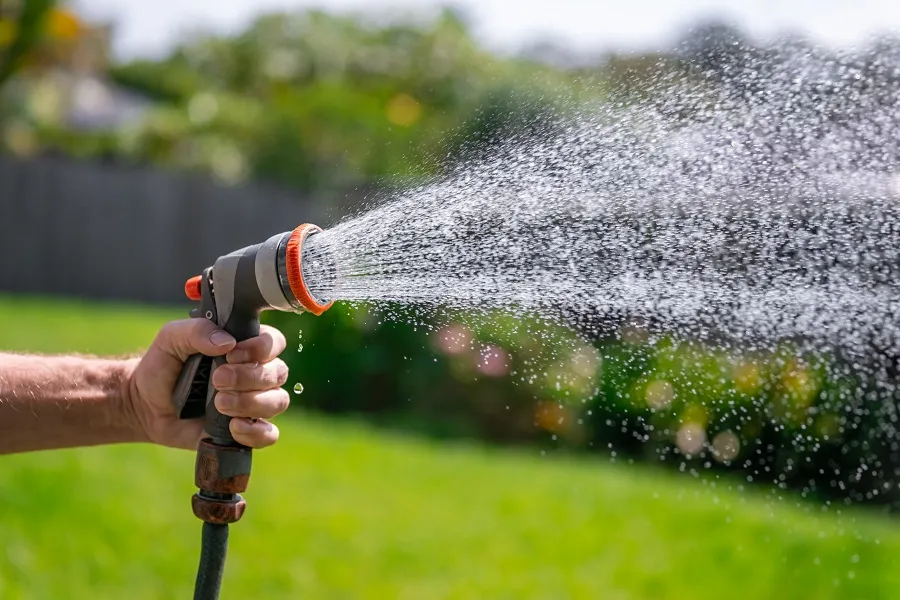
Spray down your entire fence with a garden hose to remove loose dirt, pollen, and debris. Use a sweeping motion from top to bottom, working in sections. This preliminary rinse prevents scratching when you start scrubbing.
Soap and Water Cleaning
Mix a few drops of dish soap into a bucket of warm water. Dip your soft-bristle brush or sponge into the solution and scrub the fence in circular motions. This method handles most routine dirt and grime without harsh chemicals.
Work from top to bottom to prevent dirty water from dripping onto already-cleaned sections. Rinse thoroughly with your garden hose after scrubbing each section.
Tackling Stubborn Stains
There may be marks that soap and water can't remove. In this case, create a vinegar solution by mixing one part white vinegar with four parts water. Apply this mixture to stained areas and let it sit for 10 minutes before scrubbing gently.
How to Clean White Vinyl Fence Without a Pressure Washer
Pressure washers can damage vinyl if used incorrectly, but manual cleaning achieves excellent results.
The Bucket Method
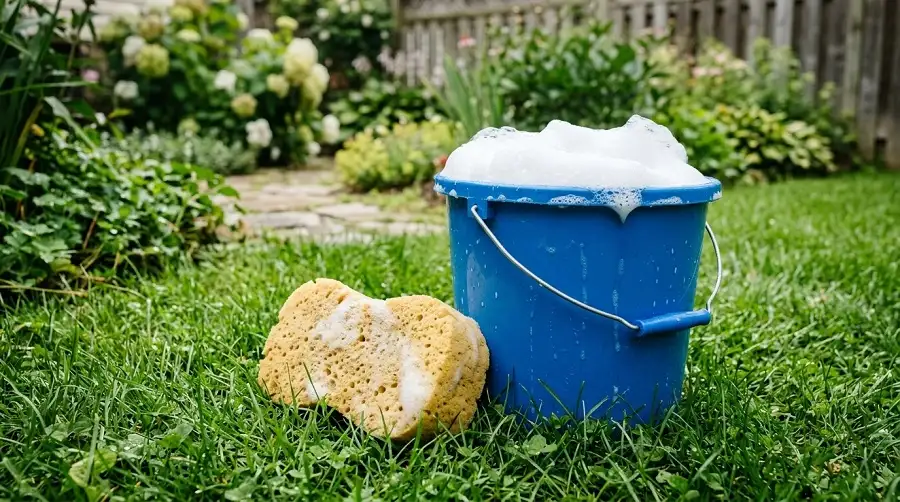
Fill a bucket with warm water and add mild dish soap. Use a long-handled soft-bristle brush to reach high sections without a ladder. This approach gives you complete control over cleaning pressure and prevents water from being forced behind fence panels.
Section-by-Section Strategy
Divide your fence into manageable 6-foot sections. Clean one section completely before moving to the next. This strategy prevents the cleaning solution from drying on the surface and leaving streaks or water spots.
How to Clean Mold Off a Vinyl Fence
Mold and mildew thrive in shady, humid areas, but thankfully, they come off easily with the right approach.
Vinegar Treatment for Light Mold
Mix equal parts white vinegar and water in a spray bottle. Spray affected areas generously and let the solution sit for 15 minutes. The acidity breaks down the mold without damaging vinyl. Then, scrub gently with a soft brush and rinse thoroughly.
Oxygen Bleach for Heavy Growth
For thick mold buildup, mix one part oxygen bleach with five parts water. Apply with a sponge or spray bottle, let sit for 10 minutes, then scrub and rinse. Oxygen bleach is gentler than chlorine bleach while still being effective against stubborn mold.
Important note: Always wear gloves when working with bleach solutions, and work in small sections to prevent the solution from drying on the fence.
Prevention Tips
- Trim vegetation near your fence to improve air circulation
- Clean shaded fence sections more frequently
- Apply the solution during cooler parts of the day to prevent rapid drying
The Best Way to Clean a White Vinyl Fence
White vinyl shows dirt more easily than other colors, but maintaining its brightness takes just a few extra steps. With a consistent cleaning routine, you can keep your fence looking pristine year-round with minimal effort.

- Monthly maintenance: A quick rinse with a garden hose prevents dirt buildup and keeps surfaces fresh between deep cleanings.
- Quarterly deep clean: Full washing with soap and water removes accumulated grime and restores original brightness.
- Annual intensive treatment: A deep clean with vinegar or oxygen bleach solution tackles stubborn stains and mildew in shaded areas.
- Grass stain removal: Scrub immediately with dish soap solution and rinse thoroughly to prevent permanent discoloration.
- Rust mark treatment: Apply white vinegar directly to the affected area, let sit for 5 minutes, then scrub gently and rinse.
- Paint splatter cleanup: Rub gently with rubbing alcohol on a soft cloth to lift paint without damaging the vinyl surface.
Quality vinyl fence installation uses materials that resist staining better than cheaper alternatives and have a higher ROI. Regular cleaning becomes faster and easier with properly manufactured vinyl that prevents permanent discoloration.
Common Cleaning Mistakes to Avoid
We want to help you protect your fence! Steer clear of these damaging practices.
What Not to Use
- Abrasive scrubbers that scratch the vinyl surface
- Harsh chemicals like undiluted bleach or ammonia
- High-pressure settings on power washers that can crack panels
- Rough brushes with stiff bristles that leave marks
Timing Matters
Clean your fence during mild weather when temperatures are between 50-80°F. Avoid cleaning in direct sunlight, as this causes solutions to dry too quickly and leave residue.
When Cleaning Isn't Enough
Sometimes fence damage goes beyond what cleaning can fix. If your vinyl shows cracks, warping, or permanent discoloration from improper maintenance, replacement might be the better investment. Professional vinyl fence installation protects your home's value and eliminates ongoing maintenance headaches.
Will Vinegar Damage a Vinyl Fence?
Properly diluted vinegar is safe and effective for vinyl fencing. The key is dilution: mix one part white vinegar with four parts water. This ratio provides enough cleaning power without risking damage to the vinyl surface. Never use undiluted vinegar, as high acidity can potentially affect the fence's finish over time.
How to Make Vinyl Fence Shine Again
Restoring your fence's original luster is possible! Here are some finishing touches to include.
Post-Cleaning Care
After thorough cleaning and rinsing, wipe down the fence with a clean microfiber cloth to remove water spots. For extra shine, some homeowners apply a vinyl-specific protectant spray, though this isn't necessary for quality vinyl fencing materials.
Long-Term Protection
- Keep landscaping trimmed back from the fence line
- Inspect regularly for early signs of dirt buildup
- Clean high-traffic areas more frequently
- Address stains promptly before they set
Maintenance Schedule for Lasting Results
Consistent care keeps your vinyl fence beautiful for decades.
Regular maintenance prevents heavy buildup that needs aggressive cleaning. Most homeowners find that quarterly cleanings keep their fence looking new with minimal effort.

