


Regular maintenance extends your fence's lifespan to 30+ years, protecting your investment. It prevents damage from factors like Chicago’s freeze-thaw cycles, summer UV rays, trapped moisture, and corrosive road salt.
Without seasonal fence maintenance, aluminum fences may develop:
- Loose posts along the fence line
- Surface scratches that weaken the protective coating
- Ice pressure around post bases
- Gradual decline in the fence’s appearance
At Cedar Rustic Fence, aluminum fence installation accounts for a large share of residential projects, making long-term aluminum fence maintenance a practical concern for homeowners. However, the right year-round maintenance approach can help aluminum fences retain their appearance, alignment, and durability through even the harshest Chicago winters.
How Aluminum Fences Compare to Other Materials

Different fence materials react differently to Chicago’s climate, resulting in a wide range of maintenance needs.
Aluminum Fence Advantages
Aluminum fence materials resist moisture absorption and don’t rot, warp, or crack. Factory-applied powder coating helps maintain long-term color retention. Aluminum fence panels stay sturdy even in freezing temperatures and under heavy snow.
Aluminum Fence Limitations
Despite low maintenance requirements, aluminum fences can still shift if fence posts loosen due to freeze–thaw cycles. Snow accumulation and high winds can place stress on fence panels and rails over time.
Why Aluminum Stands Out
Aluminum fences need significantly less maintenance than wood, but they need care distinct from vinyl or chain link options. The comparison reveals both aluminum's strengths and the areas where it needs attention.
- Aluminum fence: Low maintenance, corrosion-resistant.
- Wood fences: Trap moisture and require sealing.
- Vinyl fences: Moisture-resistant but sensitive to extreme cold.
- Chain link fences: Durable but limited aesthetic appeal.
The key advantage aluminum offers across all comparisons is durability with minimal upkeep. Wood fences demand regular work, or they deteriorate rapidly. Vinyl fences need almost no maintenance, but can fail catastrophically from impacts. Chain link requires little care but offers limited design options. Aluminum provides reasonable maintenance requirements, excellent durability, and an attractive appearance.
Spring Maintenance: Recovery from Winter Weather
Aluminum fencing performs well in Midwest weather and typically requires little to no seasonal maintenance. Unlike wood fencing, powder-coated aluminum does not rot, warp, or require refinishing after winter.
- Quick visual check: Walk the fence line after winter storms to make sure panels are aligned and gates open and close smoothly.
- Remove debris: Clear branches, leaves, or other debris that may have collected along the fence line during winter.
- Optional rinse: If dirt or road dust has accumulated, a quick rinse with a garden hose can refresh the fence’s appearance.
Summer Maintenance: Protection from Heat and UV Exposure
Summer brings increased sun exposure that can gradually fade fence finishes over time. Occasional cleaning helps keep the fence looking its best and removes dust and debris that accumulate during warmer months.
- Routine care: Rinse your aluminum fence with a garden hose or wash it with mild soap and water as needed to remove dust, pollen, and organic buildup. In most cases, cleaning once a year is sufficient.
- UV exposure: Over time, sunlight may cause very gradual fading of the finish. Modern powder-coated aluminum fences are designed to resist weathering and typically require little maintenance.
During the summer, you should also check latch operation weekly. Latches that don't engage fully create frustration and often lead to people forcing gates closed, which damages both the latch and the gate frame.
Fall Maintenance: A Seasonal Check Before Winter Weather
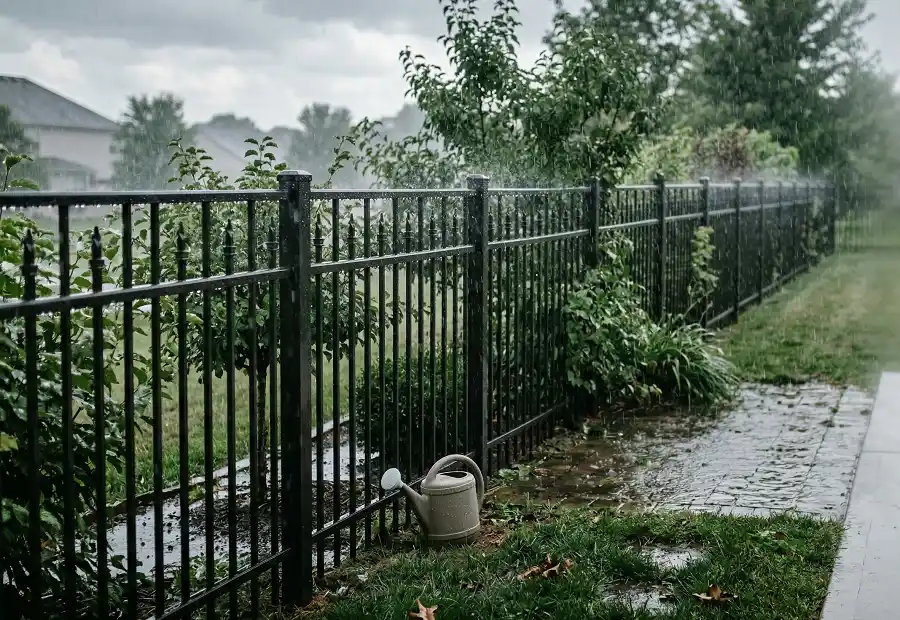
Fall maintenance protects your fence from winter's coming assault and makes spring recovery easier. Aim to complete these tasks in October or early November before the first hard freeze.
- Inspection priorities: Check fence posts, panels, and hardware for loose fasteners, damage, or shifting components. Tighten hardware and address any movement before winter weather sets in.
- Cleanup tasks: Remove all fallen leaves, organic matter, and debris from around fence posts and along the fence line. Keeping the base of the fence clear helps prevent moisture buildup and makes seasonal inspections easier. Clear mulch and soil away from fence posts to prevent moisture accumulation at ground level.
- Before the ground freezes: Test all fence posts for stability. Securing posts in the fall helps prevent soil movement during winter, which is a common cause of a leaning fence after snow and ice exposure. Any posts that show movement need attention before the ground freezes. Loose posts will shift further during winter freeze-thaw cycles, leading to alignment problems and potential gate failure.
Fall maintenance plays a direct role in reducing winter damage and preventing costly repairs.
Winter Maintenance: Managing Snow and Ice in Chicago
Winter maintenance is all about preventing damage from snow accumulation and ice buildup while avoiding maintenance activities that could harm frozen materials.
- Snow management: Clear the fence base completely to prevent ice dams from forming. Snow packed against fence posts melts during the day and refreezes at night, creating ice that can lift posts slightly. Over time, this repeated lifting and settling loosen post installations.
- Ice precautions: Ice buildup on gates and latches creates immediate operational problems and long-term damage. Check gates after freezing rain or when temperatures fluctuate around freezing. Remove ice carefully using warm (not hot) water or commercial ice melt products safe for painted surfaces.
Regular winter maintenance ensures aluminum fences withstand heavy snow and harsh Chicago winters without compromising structural integrity.
Preparing for Harsh Weather Conditions in Chicago
Chicago winters test every outdoor structure with their combination of heavy snowfall, sub-zero temperatures, biting winds, and freeze-thaw cycles. With proper winter preparation, you can protect your aluminum fence from most seasonal damage.
Winter preparation checklist:
- Schedule a professional inspection in early fall for fences over 10 years old or showing wear to catch loose posts, weakened joints, or damaged coatings before winter.
- Reinforce sections exposed to snow load and high winds, especially runs perpendicular to prevailing winds. Secure decorative tops and ornamental elements that collect ice and add weight.
- Photograph the fence before winter, including panels, posts, and gates from multiple angles. These images provide baseline documentation for insurance claims should storm damage occur.
- Set a winter maintenance schedule based on weather conditions. Clear snow within 24–48 hours after heavy snowfall, inspect gates after ice storms, and check posts after freeze–thaw cycles.
- Keep winter supplies ready, including a plastic shovel, soft brush, silicone spray lubricant, warm water for melting ice, and touch-up paint for emergency repairs.
Early preparation improves resistance to snow, ice, and high winds throughout the winter season.
Tools That Work Best for Aluminum Fence Maintenance in Chicago
Using the right tools makes maintenance easier and helps avoid damage caused by improper equipment. Build a basic aluminum fence maintenance kit with these essentials.
Store maintenance supplies in a labeled container in your garage or shed where they’ll be easily accessible year-round. Replenish items as they run out — having touch-up paint available when you spot a scratch means you can fix it immediately rather than letting moisture infiltrate.
The Cost of Maintaining an Aluminum Fence Throughout the Year
Annual aluminum fence maintenance costs remain modest compared to other fence materials, particularly when you factor in the fence's 30+ year lifespan with proper care.
DIY Maintenance Materials
Budget $50-100 annually for cleaning supplies, touch-up paint, lubricants, and protective coatings. This covers soap, brushes, several cans of touch-up paint, silicone spray, wax, and other consumables.
Repair Costs
Minor repairs like resetting one or two loose posts cost $150-300. Replacing damaged fence panels runs $200-400 per panel, including labor. Gate adjustment and hardware replacement typically cost $100-200. Powder coating touch-up or restoration for significant damage starts at $500 for smaller areas.
Professional Inspection
Annual professional inspections cost $75-150, depending on the size of the fence. Many fence companies include a basic inspection free when you schedule maintenance work.
Comparison Savings
Compare these costs to wood fence maintenance, which runs $200-500 annually in materials alone for staining or painting, plus 8-12 hours of labor. Over 20 years, aluminum fence maintenance costs roughly $1,000-2,000 in materials and 80-120 hours. Wood fence maintenance over the same period costs $4,000-10,000 in materials and 160-240 hours.
Over time, seasonal maintenance lowers overall ownership costs and protects curb appeal.

