


The fence material you choose is a long-term commitment. Choosing between treated wood and cedar for your new fence affects your budget, property value, and maintenance schedule for years to come. Both materials are durable, but they deliver different results in Chicagoland's harsh climate with freeze-thaw cycles and high humidity.
Professional Chicagoland cedar fence installers like ours at Cedar Rustic see homeowners struggle with this decision daily. In this guide, we break down the differences between pressure-treated wood and cedar fencing material, helping you make the right choice for your property and budget.
What Is Treated Wood, and How Does It Compare?
Treated wood refers to lumber that has undergone chemical treatment to resist rot, decay, and insect damage. The most common type of fencing is pressure-treated pine, where wood is placed in a pressurized chamber and infused with chemical preservatives.
The Treatment Process
Chemical treatments penetrate deep into the wood fibers, creating a protective barrier against moisture and insects. This process makes naturally vulnerable woods like pine fence boards suitable for ground contact and outdoor use. The chemical treatment involves copper-based compounds that protect the wood from decay and insects. Modern treatments such as AC2 do not necessarily give the lumber a green tint.
Important note: Not all treated wood is the same; look for ground contact-rated lumber for fence posts that will be buried, as it contains higher chemical concentrations for superior protection.
Pine vs. Pressure-Treated Pine
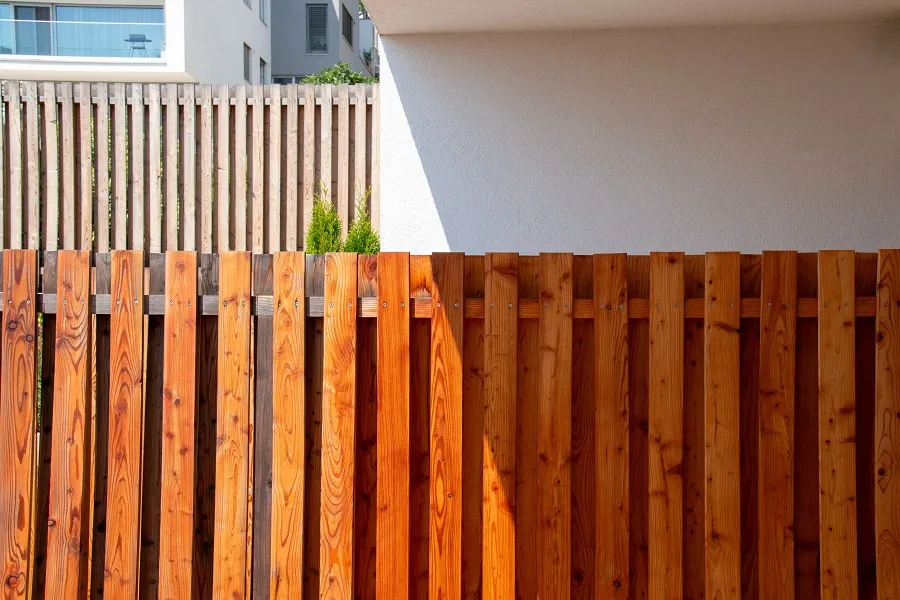
Many homeowners confuse untreated pine with pressure-treated pine fence material. Regular pine is a softwood that rots quickly outdoors, while treated pine has been chemically protected. When contractors mention "treated wood," they typically mean pressure-treated pine. This is the most common budget-friendly option for fence construction.
Cedar Fence: Natural Beauty and Built-In Protection
Cedar stands apart from other woods for many reasons. It has natural oils that repel moisture and insects without chemical treatments. Western red cedar and Northern white cedar both offer these protective qualities, making them premium choices for cedar fencing projects.
Natural Resistance Benefits
Cedar's natural oils create a built-in defense system against rot and decay. These oils don't just sit on the surface — they permeate the entire board and offer protection that chemical treatments can't match. Another bonus is that cedar requires no harsh chemicals to resist insects and moisture damage.
Aesthetic Appeal and Grain Patterns
- Rich color: Cedar lumber starts with warm reddish-brown tones that many homeowners love for their natural beauty and premium appearance.
- Fine grain: The tight, consistent grain patterns in cedar fence pickets create an upscale look that elevates curb appeal immediately.
- Weather aging: Without staining, cedar naturally weathers to an attractive silver-gray patina that many consider even more beautiful than the original color.
Cost Comparison: Cedar vs. Pressure-Treated Wood
Budget considerations drive many fencing decisions, but we encourage our customers to see the long-term value. This requires looking beyond initial price tags. Installation costs, maintenance expenses, and replacement timelines all factor into the real cost of your fence.
Initial Investment Differences
Pressure-treated fence material costs $20-40 per linear foot installed in Illinois, making it the budget-friendly option upfront. Cedar fence costs run $25-65 per linear foot installed, with Western red cedar commanding the highest prices because of its superior durability and appearance.
Long-Term Value Analysis
- Maintenance costs: Pressure-treated fences need regular staining every 2-3 years ($500-1,500 per application)to slow weathering and maintain appearance, though natural wood movement like warping can still occur as the fence dries.
- Replacement timeline: Treated pine fences typically last 20+ years before posts rot at ground level, whereas properly installed cedar lasts 15-20 years with minimal maintenance.
- Property value impact: Cedar's superior appearance and longevity increase property value more than treated wood, often recovering the higher initial cost at resale.
Durability and Longevity: Key Differences
Climate challenges in Chicagoland test fence materials relentlessly. Freeze-thaw cycles, heavy snow loads, and summer humidity create harsh conditions that reveal quality differences between fencing materials quickly.
How Each Material Handles Weather
Pressure-treated pine absorbs moisture in wet climates despite chemical treatment, leading to warping as it dries. The treatment process itself introduces moisture that takes months to dry completely, causing boards to twist and shrink. Cedar's natural oils resist moisture absorption, giving it the ability to maintain dimensional stability through seasonal changes.
Ground Contact Performance
- Post longevity: Pressure-treated fence posts typically last 20–30 years in ground contact, often longer than cedar posts. Cedar posts generally last 15–20 years, depending on soil conditions and drainage.
- Chemical protection: Pressure-treated wood is infused with preservatives that help resist rot, insects, and moisture, making it well-suited for ground contact applications.
- Cedar’s strength: Cedar is naturally rot-resistant and more dimensionally stable, meaning it tends to warp and twist less while maintaining an attractive appearance over time.
Important note: All fence posts benefit from concrete footings to minimize ground contact and extend lifespan, regardless of wood type.
Maintenance Requirements: Time and Effort
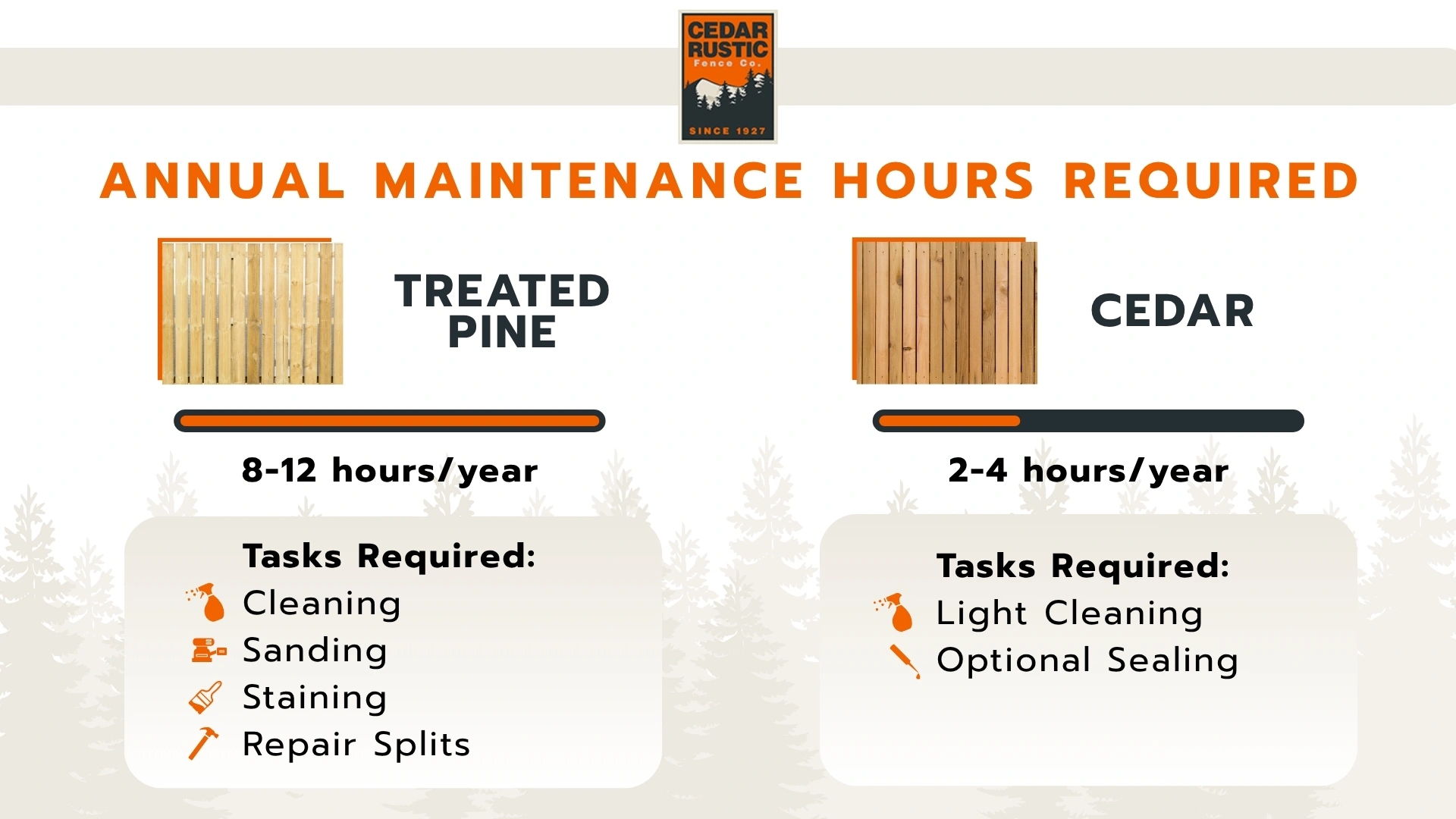
Another factor that impacts your fence’s appearance and longevity is maintenance demands. Many homeowners underestimate the ongoing work needed to keep pressure-treated fences looking good and structurally sound.
Pressure Treated Pine Maintenance
Pressure-treated fences require regular attention to prevent deterioration. New installations need 6-12 months to dry before accepting stain properly. Once dry, you'll need to clean, sand, and apply stain every 2-3 years to prevent graying, splintering, and moisture damage. When you miss maintenance, it accelerates warping and rot significantly.
Cedar's Low Maintenance Option
Cedar requires far less ongoing work than treated alternatives. Occasional cleaning with mild soap removes dirt and mildew. Sealing cedar fence boards every 3-5 years preserves color, but it's optional — many homeowners prefer the natural weathered look. Without sealing, cedar turns gray gracefully while maintaining structural integrity.
Installation Considerations for Each Material
Professional installation determines how well your fence performs, regardless of material choice. Improper techniques cause premature failure even with premium lumber, while expert installation maximizes lifespan and appearance.
Working with Treated Wood
Treated pine's high moisture content makes installation challenging. Boards are heavy, hard to cut cleanly, and can warp during installation as they continue to dry. Galvanized or stainless steel fasteners are essential — regular screws corrode quickly from chemical contact. Proper spacing between boards accommodates shrinkage as treated wood dries completely over 6-12 months.
Advantages of Cedar Installation
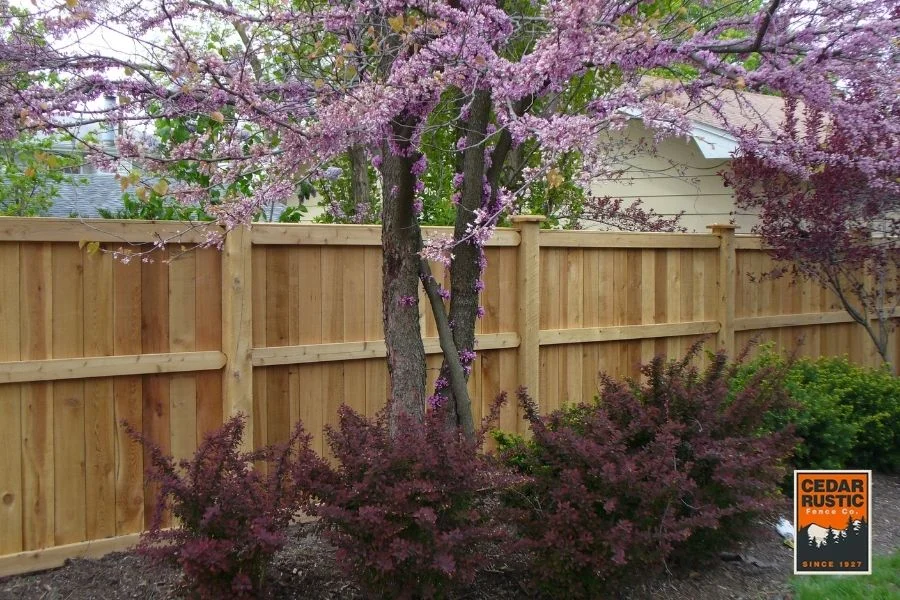
- Dimensional stability: Cedar lumber comes properly dried, preventing post-installation warping and maintaining straight, tight fence lines throughout its life.
- Easy working: Cedar cuts cleanly without splintering, allowing precise joints and a professional appearance that enhances curb appeal immediately.
- Faster finishing: Unlike pressure-treated wood, cedar accepts stain immediately if desired, eliminating the 6-12 month waiting period for finishing work.
Important note: Both materials require frost-depth footings (minimum 42 inches in Illinois) to prevent heaving and maintain structural integrity through freeze-thaw cycles.
Environmental and Safety Factors
Chemical treatments raise valid concerns about environmental impact and family safety. The chemicals that protect pressure-treated wood from decay also create disposal challenges and potential health risks. Here’s what you need to know.
Chemical Treatment Concerns
Modern treated wood uses copper-based compounds instead of older arsenic formulations, but chemicals still leach into the surrounding soil over time. The treatment process requires careful handling during cutting — sawdust contains chemicals that shouldn't be inhaled. Disposal of old pressure-treated fences requires special handling, as many landfills classify them as hazardous waste.
Cedar's Natural Approach
- Chemical-free: Cedar offers natural resistance without harsh chemical treatments, making it safer for families, pets, and gardens near fence lines.
- Sustainable choice: Both Western red cedar and Northern white cedar come from responsibly managed forests, offering renewable fencing materials with minimal environmental impact.
- Safe disposal: When cedar fences eventually need replacement, wood breaks down naturally without releasing harmful chemicals into the soil.

