


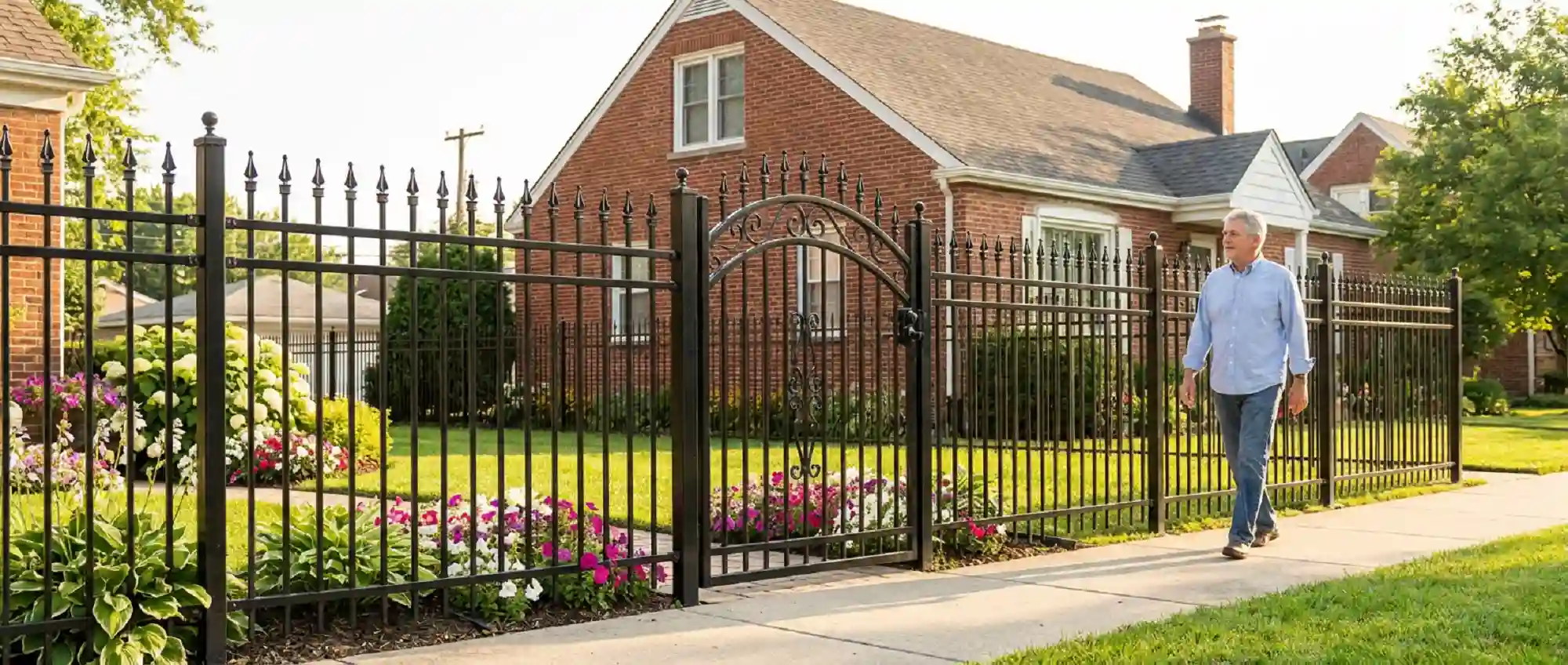


Quick answer: If you’re wondering how much an aluminum fence costs per foot, most basic residential projects start around $20–$40 per linear foot installed, then add extra for gates, removal, specialty hardware, or premium styles.
So, how much does it cost to build an aluminum fence around a typical backyard? For a 150-foot layout, a basic residential aluminum fence may cost roughly $3,000–$6,000 before gates, removal, or upgrades.
Cedar Rustic Fence Co. installs aluminum fencing for homeowners across Chicagoland and Northwest Indiana, with options for pools, pets, decorative yard borders, and open property lines. Our team is here to guide you through aluminum fence styles, picket spacing, gate hardware, colors, and grade options so the fence fits both your budget and how you use your yard.
Aluminum Fence Cost at a Glance
The cost to install an aluminum fence can change quickly once gates, hardware, slope, removal, and code requirements are added. Basic fence lines without gates aren’t the same as pool fences with self-closing hinges, two gates, tearing out an old fence, and a sloped yard.
What Changes the Cost to Install an Aluminum Fence?

1. Fence Length
More footage means more panels, posts, concrete, hardware, and labor. A straight fence line is usually simpler to install than a yard with several corners or angled sections. A contractor will measure the fence line, gate openings, corner posts, end posts, and any changes in elevation before giving a firm price.
2. Fence Height
Aluminum fences are often installed at 4, 5, or 6 feet tall. A 4-foot aluminum fence is common around pools, pets, and decorative yard areas. Taller fences cost more because they use larger panels, stronger posts, and more material. For pool fencing, local codes may affect height, gate swing, latch location, and spacing between pickets.
3. Residential vs. Commercial Grade
Not every aluminum fence has the same strength. Cedar Rustic Fence offers aluminum options in different grades, including residential, residential wide, and commercial styles.
- Residential aluminum works well for most homes, pools, and pet areas.
- Residential wide aluminum gives the fence a stronger visual presence.
- Commercial-grade aluminum fits higher-traffic spaces, shared property lines, businesses, neighborhood entrances, and security-focused layouts.
Commercial-grade aluminum is more expensive, but it’s worth it when the fence needs extra strength.
4. Picket Spacing
Picket spacing impacts the fence’s look and functionality.
Standard picket spacing works well for many yards. Tight spacing or puppy pickets can help with small dogs, while extra pickets can make the fence feel more secure without turning it into a solid privacy wall.
For pets, ideal spacing can prevent small dogs from slipping through or getting stuck, especially when the project needs a true dog fence rather than a basic decorative border.
Pool projects may also need code-friendly height, latch placement, and picket spacing, so pool fence material can affect both the upfront quote and long-term maintenance.
5. Gates and Hardware
A walk gate isn’t priced like a standard fence panel because it requires hinges, latch hardware, stronger posts, and precise alignment. Common gate and hardware options include:
- Walk gates
- Double gates
- Pool latches
- Self-closing hinges
- Drop rods
- Heavy-duty hinges
- Gravity latches
- Decorative caps
- Ball caps
- Finials
A single walk gate may only add a modest amount to the quote. A wide double gate, pool-code gate, or upgraded hardware package can add much more.
#cta_start
Not Sure If Aluminum Is the Right Fit?
If you’re comparing aluminum with cedar, vinyl, chain link, or steel, Cedar Rustic can help you price the options side by side. Our experts can guide you toward your ideal aluminum fence style and give you a clear estimate for your property.
#cta_end
6. Slope and Yard Shape
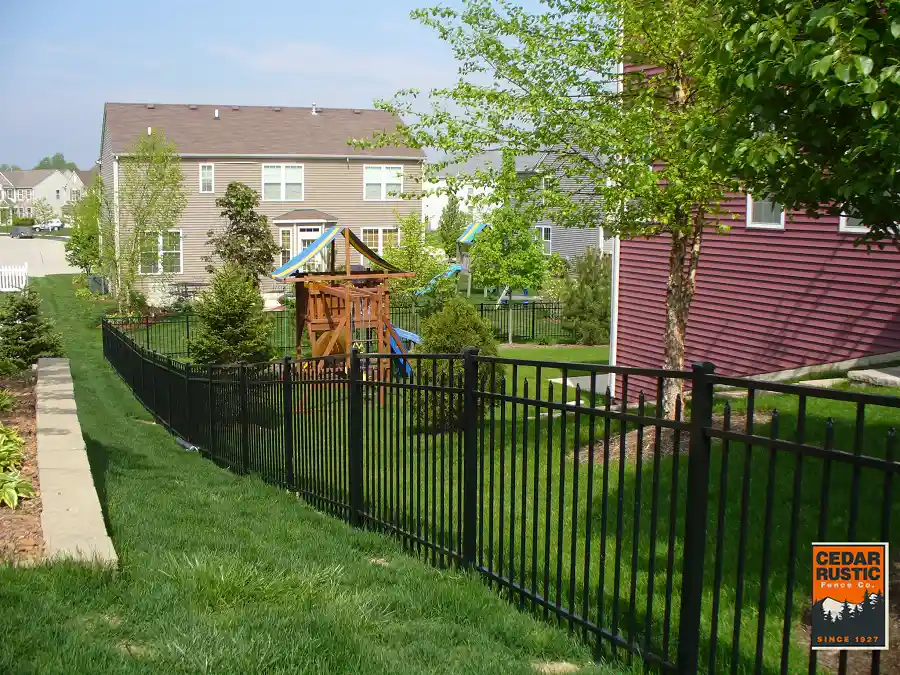
Some aluminum fences follow the grade, meaning the panels move with the natural slope. Others are stepped, meaning each panel drops down in sections. The right option depends on the yard, fence style, and the amount of space under each panel.
Slope can affect post depth, panel placement, gate alignment, bottom gaps, labor time, and the overall finished appearance.
7. Old Fence Removal
If an old fence needs to come out first, removal and hauling will increase the project cost. Wood, chain link, vinyl, and metal fences all have different tear-out labor needs.
Old posts set deep in concrete take more time to remove. Vines, shrubs, roots, and debris along the fence line can also add prep work.
8. Permits, HOA Rules, and Property Lines
Many towns in Illinois require a fence permit. HOA communities may also have rules for material, height, color, placement, and style. Before installation, homeowners should check:
- Property line location
- Easements
- HOA rules
- Pool fence code
- Utility markings
- Local fence permit rules
- Corner lot visibility rules
A recent plat of survey can help prevent disputes with neighbors and reduce layout problems.
Aluminum Fence Cost Compared to Other Fence Materials
Choosing the material is one of the biggest reasons a fence installation cost can shift from a budget chain link project to a higher-end decorative aluminum or privacy fence.
Is an Aluminum Fence Worth the Higher Cost in Chicago?
Aluminum fencing can be worth the higher price compared with chain link when you want a fence that looks finished, lasts longer visually, and doesn’t need painting or staining. It’s often a wise investment for pool areas, front yards, pet fencing, and decorative property lines, as those spaces benefit from both curb appeal and low maintenance.
Aluminum is usually worth pricing out when you want:
- A pool fence that keeps the view open.
- A pet fence that looks more finished than chain link.
- A front-yard fence with curb appeal.
- A low-maintenance fence for rain, snow, and seasonal weather.
- A wrought-iron look without the same rust concerns.
- A long-term fence that won’t need staining like wood.
Aluminum may not be the best use of the budget if you need:
- Full privacy, where cedar or vinyl usually makes more sense.
- The lowest-cost fence line, where chain link often wins.
- A rustic wood look, where cedar is the better match.
- Heavy-duty security, where commercial steel may be worth comparing.
Aluminum isn’t always the cheapest option, but it can provide more value when the fence will be visible, used around a pool, or installed for pets and curb appeal. If privacy is the goal, compare cedar and vinyl first. If the goal is the cheapest fence to be installed, chain link usually deserves a closer look before aluminum.

DIY vs. Professional Aluminum Fence Installation
Aluminum panels are lighter than steel or wood, so DIY installation may look simple at first. The hard parts usually show up during layout, post setting, slope changes, and gate alignment.
DIY may work for:
- Short fence runs
- Flat yards
- Straight layouts
- No pool-code concerns
- One simple gate
Professional installation is usually better for:
- Pool fences
- Sloped yards
- Multiple gates
- Pet-safe layouts
- Commercial-grade aluminum
- HOA or municipal requirements
- Long fence lines
- Replacement projects with old fence removal
Panels alone don’t dictate the cost to install an aluminum fence. Materials cover panels, posts, concrete, gates, and hardware. Labor covers measuring, post-hole digging, setting posts, adjusting for grade, hanging gates, and cleaning up the work area. This is why two aluminum fence quotes can have the same footage but different totals.
Aluminium Fencing Extra Costs: Removal, Gates, Permits, and Site Prep
The base price of an aluminum fence typically covers the main fence line, but some projects need extra work before or during installation.
Common line items that may appear on a quote include old fence tear-out, brush clearing, gate upgrades, pool-safe latch hardware, permit fees, survey work, grade adjustments, utility marking, and decorative accessories.
Don’t be fooled by a low per-foot number, as it can be misleading. A straight fence line with no gate isn’t the same project as a pool fence with two gates, self-closing hardware, old fence removal, and a sloped yard.
How to Save Money on an Aluminum Fence in Chicago
A lower price shouldn’t mean a weak fence. The better goal is to remove costs that don’t add much value to your yard.

1. Keep the Layout Simple
Every corner, turn, gate, and slope change adds complexity. A clean layout can lower labor and material waste.
2. Limit the Number of Gates
Gates are useful, but they add cost. Place them where they truly help with daily access.
3. Use Decorative Upgrades Selectively
Finials, caps, and ornamental details look great in front-facing areas. They may not be needed along the back property line.
4. Match the Fence Grade to the Yard
Most residential yards don’t need commercial-grade aluminum. On the other hand, a high-traffic area may be worth the upgrade.
5. Talk to Neighbors Early
Neighbors may want to split a shared fence line, match the existing style, or coordinate timing. A quick conversation can prevent layout issues later.
Frequently Asked Questions About Aluminum Fence Cost in 2026
#faqs_start
Do I need a permit to put a fence around my yard?
Oftentimes, yes. Fence permit rules depend on your city, village, county, and HOA. For example, Joliet states that a permit is needed for fences, pools, sheds, and other residential projects, and DuPage County also lists fence permits through its Building & Zoning process. We recommend checking local rules before installation.
How much does it cost to build an aluminum fence around a backyard?
A 150-linear-foot backyard aluminum fence may cost around $3,000 to $6,000 for a basic residential installation. Larger yards, taller panels, decorative upgrades, and difficult ground conditions can raise the total.
Do utility lines need to be marked before fence installation??
Yes. Fence posts require digging, so underground utilities should be marked before work starts. Illinois residents outside Chicago use JULIE/811, while Ready Illinois notes that Chicago projects use DIGGER.
What is the best time of year to install an aluminum fence?
Spring and summer are the busiest seasons, especially for pool and pet fence projects. Fall can be a good time because the ground is often still workable, and scheduling may be easier. Winter installation depends on weather, frozen ground, and contractor availability.
Does an aluminum fence rust?
No, aluminum doesn’t rust like iron or untreated steel. This makes it a strong option for Chicagoland weather, pool areas, and yards exposed to rain and snow..
How long does an aluminum fence last?
A quality aluminum fence can last for decades with basic care. It doesn’t need staining like wood and does not rust like iron.
What is the lifespan of an aluminum fence?
A quality aluminum fence can last for decades with basic care. It does not rust like iron or untreated steel, and it does not need staining or painting like wood. Hardware, gate use, soil conditions, and installation quality can affect long-term performance.
Does an aluminum fence increase property value??
An aluminum fence can improve home appeal, define the yard, add pool safety, and make the property more usable for pets or children. It may support resale appeal, but it shouldn’t be treated as a guaranteed dollar-for-dollar property value increase.
How long does it take to install an aluminum fence?
Many standard residential aluminum fence installations take 1 to 3 days once materials are ready and approvals are handled. Larger yards, multiple gates, old fence removal, slope work, pool-code details, or bad weather can make the timeline longer.
#faqs_end

