


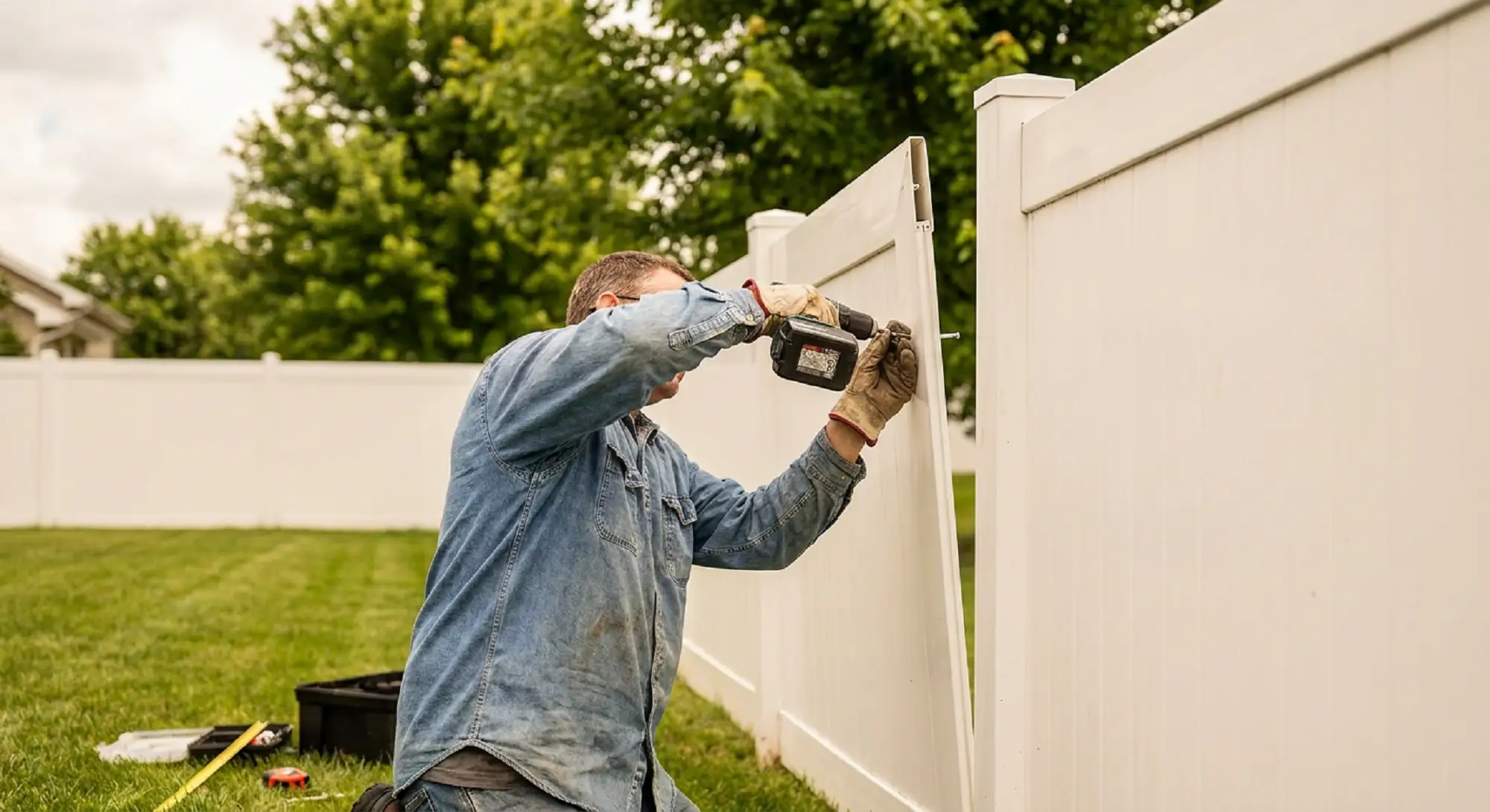


A cracked panel, loose post, broken rail, or gate that no longer latches can make a clean vinyl fence look worn before its time. The good news? Many vinyl fence issues can be repaired section by section, so you may not need to replace the entire fence.
Cedar Rustic Fence Co. has served Chicagoland homeowners since 1927, providing cedar, aluminum, chain link, and vinyl fencing services for privacy, pets, pools, and curb appeal. Because vinyl fencing is one of the most requested residential fence options in the area, repair questions arise after storms, freeze-thaw cycles, lawn equipment damage, or years of normal use.
Quick Answer: Can a Vinyl Fence Be Repaired?
Yes, vinyl fencing can often be repaired. Small chips, missing caps, loose rails, single damaged panels, latch issues, and mild gate sag may be fixable without a full replacement. Larger problems, such as shattered panels, cracked posts, severe warping, or several loose sections, usually require replacement parts rather than simple repairs.
Homeowners looking for vinyl fence repair in the Chicago area often need help after storms, freeze-thaw movement, mower damage, or gate wear.
Check the Damage Before Taking the Fence Apart
Take 10 minutes to walk the entire fence line. A broken panel may be the visible problem, but the real cause could be a loose post, missing rail support, soil movement, or gate strain.
If possible, check the fence from both sides, looking at each post, rail, panel, and gate. Push gently on suspicious areas. A healthy vinyl fence section should feel firm, not wobbly or hollow in a way that suggests a loose connection.
Inspection checklist:
- Cracks near rail ends, post openings, and panel corners
- Rails that slipped out of the post
- Panels that rattle in the wind
- Posts that rock when pushed
- Missing, cracked, or loose post caps
- Gate hinges pulling away from the post
- Latch that no longer lines up
- Soil washed away around post bases
- Mower, snow blower, branch, or impact damage
Take photos before removing parts, capturing the panel style, height, rail shape, color, cap type, and hardware. Vinyl systems vary by manufacturer, and older replacement parts can be harder to match.
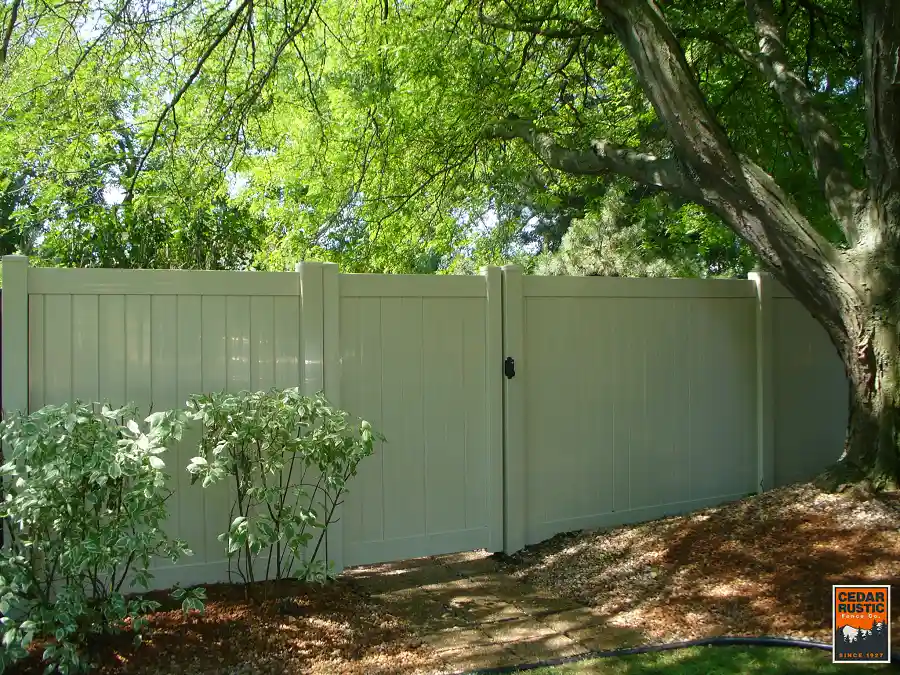
Tools and Materials for Vinyl Fence Repair
Before you take apart a panel or post, gather some basic tools. The exact list depends on the fence style and the damage, but most small vinyl fence repairs require:
- Work gloves
- Safety glasses
- Tape measure
- Level
- Screwdriver or drill
- Rubber mallet
- Soft cloth or soft-bristle brush
- Vinyl-safe cleaner
- Vinyl repair kit for small chips or holes
- Replacement rail, panel, picket, cap, hinge, or latch if needed
Avoid using wood filler, harsh adhesives, or parts that only “almost” fit. Vinyl fence systems are designed around specific panel, rail, and post dimensions, so mismatched parts can create bigger problems over time.
Take photos before removing parts, especially if the repair depends on matching older rails, caps, panel profiles, or vinyl fence colors.
Common Vinyl Fencing Issues and What Usually Causes Them
Most vinyl fencing issues fall into a few repeat categories: cracks, loose posts, broken rails, sagging gates, staining, missing caps, and weather movement. The repair works best when the root issue is addressed, not just the visible damage.
- Cracked panels often come from impact. Lawn equipment, falling branches, sports equipment, and cold-weather stress can all split vinyl. A small surface chip is different from a crack that extends across the panel.
- Loose posts often point to soil movement, poor drainage, shallow setting, or freeze-thaw pressure. Chicago-area winters can push and pull around post bases, especially where water sits.
- Broken rails usually happen after impact or when a post shifts enough to pull the rail out of alignment. Once a rail loses support, the panel may start to sag.
- Gate problems come from repeated use. Hinges loosen, latches shift, gate frames twist, or the latch post leans.
- Stains and mildew are surface issues in many cases. Vinyl doesn’t rot like wood, but shade, sprinkler residue, soil splash, and algae can leave marks.
How to Repair a Cracked or Broken Vinyl Fence Panel
A damaged vinyl fence panel is one of the most common repair requests. The ideal fix depends on whether the damage is cosmetic or structural.
Small Crack or Chip
A vinyl fence repair kit can address the majority of small surface cracks. Clean the area first, let it dry, apply the filler or patch material, then smooth it so it blends with the panel.
This works best for:
- Small chips
- Hairline cracks
- Screw holes
- Light cosmetic damage
It isn’t ideal for a panel that is split across the face or cracked near the rail connection.
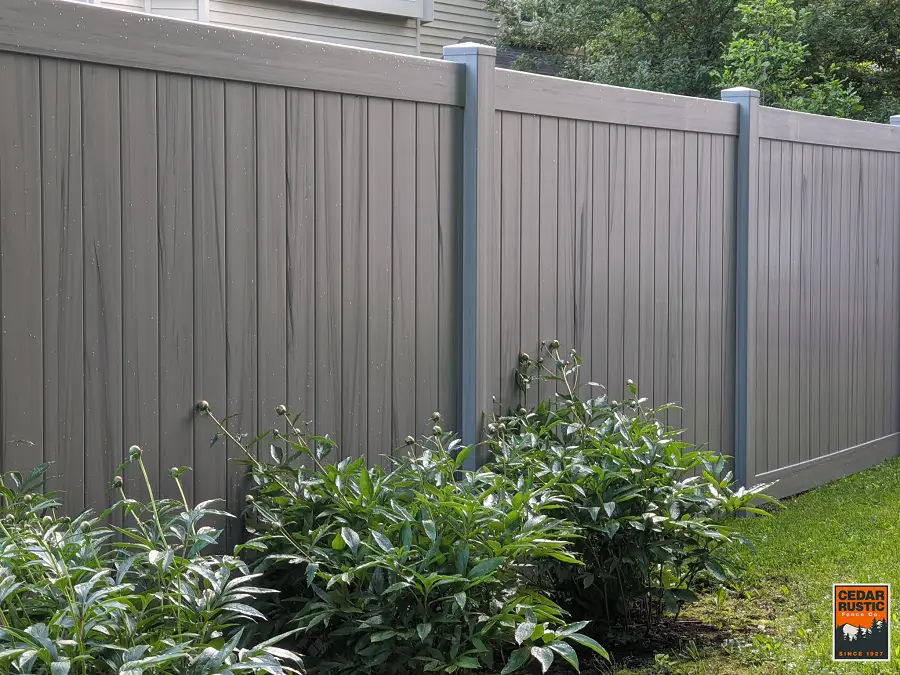
Broken or Shattered Panel
A badly cracked panel should usually be replaced. If the fence uses individual pickets, you may only need to replace the damaged pickets. If it uses a full privacy panel, the full panel section may need to come out.
Basic repair path:
- Remove the post cap if needed.
- Release the rail from the post.
- Slide out the damaged panel or pickets.
- Match the replacement by style, height, color, and rail profile.
- Reinstall the panel.
- Check that the section is level and secure.
How to Repair a Loose or Cracked Vinyl Fence Post
A loose vinyl fence post is more serious than a cracked cap or dirty panel. Posts support rails, panels, corners, and gates. If a post moves, the fence section may sag, rattle, or separate.
If the Post Is Loose
A loose post may need to be reset, especially if the problem looks more like fixing a leaning fence post than replacing a cracked vinyl shell.
Enlist the expertise of a fence repair technician to look at the post when:
- The post supports a gate.
- The post is cracked.
- The fence sits on a slope.
- Several posts are leaning.
- The post moves again after repair.
- Utility lines may be near the digging area.
If the Post Is Cracked
In most cases, a cracked post needs replacement. A patch may hide the crack, but it will not make the post strong enough to support rails, a gate, or a corner section. While a surface patch or specialized vinyl filler may temporarily hide the visual damage, such cosmetic fixes won’t restore the necessary structural strength if the post is responsible for carrying heavy rails, supporting a swinging gate, or anchoring a corner section.
How to Fix a Vinyl Fence Gate That Sags or Won’t Latch
A sagging gate can make a fence feel broken even when the panels are fine. Start with the hardware, then check the post.
Gate repair checklist:
- Tighten hinge screws.
- Check whether hinges are bent or worn.
- Realign the latch.
- Confirm the gate frame is square.
- Look for cracks near hinge points.
- Check whether the gate post is plumb.
- Ensure the gate clears the ground.
How to Repair Vinyl Fence Holes or Dents
Small holes, dents, and surface marks may be fixed with a vinyl fence repair kit. First, clean the area, let it dry, then apply the filler or patch material following the product directions.
A repair kit may work for:
- Small holes from screws or impact
- Shallow dents
- Minor surface chips
- Light cosmetic marks
If the hole goes through a rail, post, or panel connection point, replacement is usually safer than patching. That area may need to hold weight or pressure.
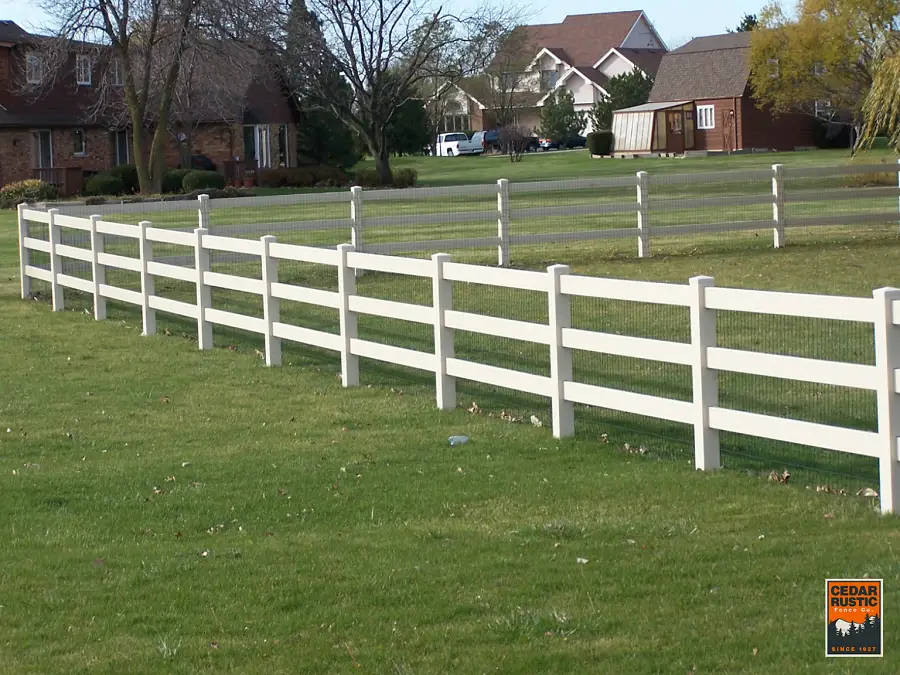
How to Repair a Vinyl Fence Rail
A broken rail should usually be replaced, not patched. Rails hold the panel in place, so when a rail is weak, the whole section could sag or rattle.
Basic repair steps:
- Remove the nearby panel or pickets if needed.
- Release the damaged rail from the post.
- Check the post opening for cracks or broken tabs.
- Match the new rail by size, shape, and color.
- Slide the rail into place.
- Reinstall the panel and check that the section is level.
If the rail continues slipping out, the post opening may also be damaged.
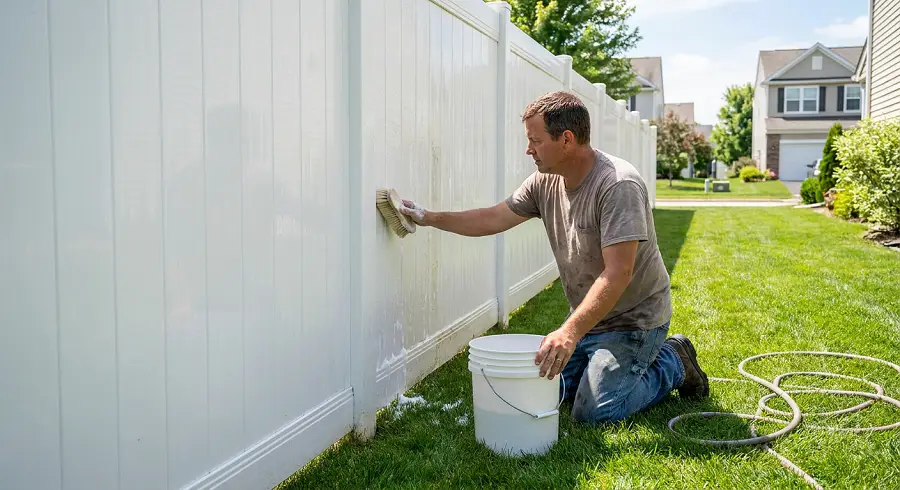
How to Clean Vinyl Fence Stains Before Replacing Panels
Not every ugly spot is damaged. Vinyl can collect dirt, mildew, algae, grass clippings, sprinkler minerals, and road dust, so learning how to clean a vinyl fence should be the first step before pricing out replacement panels.
Vinyl fence cleaning steps:
- Rinse the fence with a garden hose.
- Wash with mild soap and warm water.
- Use a soft cloth or soft-bristle brush.
- Rinse from top to bottom.
- Let the surface dry before judging the result.
Avoid steel wool, harsh abrasives, and high-pressure washing close to the surface. These can scratch the material, making it easier for dirt to build up and harder to clean later.
If the fence still looks faded after cleaning, the issue may be sun exposure, age, or lower-grade material. At that point, repair may not restore the appearance. Replacement panels or a larger update may make more sense, especially for front-facing sections or privacy fence areas that shape curb appeal.
Safety Note Before Digging Around Vinyl Fence Posts
Post-repair often requires digging. Before digging around a fence post in Illinois, homeowners should request utility marking through JULIE Before You Dig. Inside Chicago, utility marking is handled through Chicago DIGGER. Ready Illinois also explains the difference between JULIE and DIGGER on its utility safety page.
This step matters even for small fence repairs. Gas, electric, communication, and irrigation lines may run closer to the fence than expected.
What Does Vinyl Fence Repair Cost in the Chicago Area?
Vinyl fence repair cost depends on whether the job is a small part fix or a section replacement.
If the damage is large enough to replace part of the fence, new vinyl fence installation prices can be helpful to reference. In Illinois, installed vinyl fencing often ranges from $24 to $60 per linear foot. Basic vinyl picket fencing is usually lower, while 6-foot vinyl privacy fencing often runs $40 to $60 per linear foot. Decorative or premium vinyl styles can reach $60 to $80+ per linear foot.
Gate repairs or replacements can also raise the price. New gate work may add $300 to $1,500, depending on size, style, and hardware. Old fence removal, difficult site access, slopes, post resetting, and permit needs can all affect the final estimate. For a broader look at material and installation pricing, compare current vinyl fence cost factors before deciding between repair and replacement.
When Vinyl Fence Replacement Makes More Sense Than Repair
When the damage is limited, the parts are available, and the fence still has a clean line, consider vinyl fence repair. Replacement may be smarter when several panels are brittle, the fence is warped, posts keep moving, or the damage suggests the fence is near the end of its vinyl fence lifespan.
Repair may work when one panel is cracked, one rail is loose, a cap is missing, or a gate needs adjustment. Replacement may be smarter when several panels are brittle, the fence is warped, posts keep moving, or old parts no longer match.
If the fence no longer fits how the yard is used, a repair could only delay an inevitable update. A family with a new dog may need a more secure dog fence if the damage creates low gaps, weak gate points, or loose panels. A backyard pool may need a pool fence that meets local barrier rules. A yard with close neighbors may benefit from a stronger privacy fence.
Vinyl Fence Repair Mistakes That Can Worsen Damage
Some vinyl fence repairs are simple, but don’t be tempted by a shortcut, as it can make the damage worse. Vinyl parts are designed to fit together as a system, so forcing panels, using the wrong adhesive, or ignoring post movement can turn a small repair into a larger replacement.
Avoid these common mistakes:
- Do not force cold vinyl apart. Vinyl can become less flexible in low temperatures, making panels and rails more likely to crack during removal.
- Do not use wood filler, caulk, or random exterior patching products. Use materials made for vinyl or PVC surfaces.
- Do not patch a cracked post and assume it is fixed. Posts carry the fence line. If the post is split, leaning, or loose at the base, it usually needs structural repair or replacement.
- Do not ignore a loose rail. A rail that rattles or slips out can put pressure on the panel and nearby post openings.
- Do not use mismatched replacement parts. A rail or panel that almost fits can loosen, bow, or crack later.
- Do not over-tighten screws. Too much pressure can crack vinyl or restrict normal expansion and contraction.
- Do not pressure wash too close to the fence. High pressure can damage the surface, loosen caps, or force water into joints.
- Do not dig around posts without utility marking. Use JULIE or Chicago DIGGER before digging near fence posts.
- Do not leave a pool fence section open. If the fence surrounds a pool, secure the area until the barrier is repaired.
- Do not repair only the visible damage if the fence is leaning. A cracked panel may be the result of post movement, not the main problem.
A good rule: cosmetic damage can often be patched, but anything that supports weight, holds a panel in place, or affects a gate should be treated as a structural repair.

